

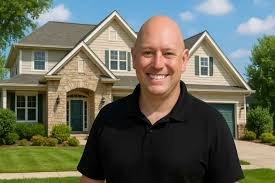
If a $525,000 home purchase in Stafford County puts 10% down, the loan amount is about $472,500. At 6.75% versus 7.125%, the principal and interest payment is roughly $3,065 instead of $3,182 – a difference of about $117 a month, or $7,020 over five years before taxes, insurance, and HOA. That is why working with a local mortgage broker Stafford County buyers can actually reach matters more than slogans.
By Duane Buziak, Mortgage Maestro, NMLS#1110647
A mortgage is not just a rate sheet. In Stafford County, the right structure depends on local price points, your income type, military eligibility, reserve position, and how fast a seller expects you to clear financing. Buyers around Embrey Mill, Colonial Forge, and routes feeding I-95 often compete on speed and certainty as much as price. A broker who understands those local pressure points can often make a bigger difference than a flashy national ad.
Why a local mortgage broker Stafford County borrowers use can matter
Stafford County purchase scenarios are rarely one-size-fits-all. A first-time buyer near the county median price has very different constraints than a self-employed borrower buying above conforming limits or an investor using DSCR. Local context matters because underwriting choices show up in real numbers – minimum down payment, reserve requirements, appraisal risk, and how much payment shock your file can support.
Recent public market trackers have placed Stafford-area median listing or sale prices in the mid-$500,000 range, with figures commonly clustering around roughly $540,000 to $575,000 depending on source and month. See Zillow at https://www.zillow.com/home-values/ and Realtor data at https://www.realtor.com/realestateandhomes-search/Stafford_VA/overview. For many borrowers, that means even a small pricing gap or fee difference translates into thousands over the early years of ownership.
A broker model also differs from a single retail lender. Instead of fitting you into one credit box, a broker can compare lender overlays, pricing, and documentation rules across multiple investors. That does not guarantee the lowest rate in every case. Some big lenders run promotional pricing on certain products. But when the file is less straightforward – variable income, bank statement qualification, condo issues, higher DTI, DSCR, jumbo, or non-QM – flexibility usually matters.
Stafford mortgage options by borrower type
Conventional loans are often the best fit for buyers with stronger credit and stable income. Many borrowers can qualify with 3% to 5% down, but pricing usually improves at 10% to 20% down and with credit scores above 700. A practical benchmark is 620 minimum for many conventional programs, though better execution often starts closer to 680 to 740.
FHA is useful when credit is thinner or debt ratios run higher. A 3.5% down payment is available for many borrowers with a 580 score or better, while lower scores can require 10% down. FHA tends to be more forgiving on prior credit events, but mortgage insurance can stay in place longer depending on the loan structure. HUD guidance is the reference point here: https://www.hud.gov/buying/loans.
VA loans remain one of the strongest tools for eligible veterans and active-duty borrowers in Stafford. With full entitlement, many borrowers can buy with no down payment within county loan limits and sometimes above them with lender-specific guidelines. Credit flexibility is often better than conventional, and monthly mortgage insurance is not required, though the funding fee can apply unless exempt. The VA home loan page is here: https://www.va.gov/housing-assistance/home-loans/.
USDA can fit select rural-eligible properties, though location eligibility must be checked carefully. Jumbo becomes relevant once loan amounts exceed the conforming limit. In most high-balance years, the standard conforming limit for a one-unit property sits at a level many Stafford borrowers can still use, but higher-priced homes can push buyers into jumbo underwriting, where 700+ scores, 10% to 20% down, and 6 to 12 months of reserves are common.
For self-employed borrowers, bank statement and non-QM loans can solve income documentation problems that tax returns create. For investors, DSCR focuses on property cash flow rather than personal income, but rates and down payment requirements are usually higher than conforming financing. Reverse, construction, 203k, foreign national, and commercial financing each have their place, but they are specialized products where lender choice matters even more.
Comparison table: local broker vs retail bank vs online lender
| Factor | Local mortgage broker | Retail bank/lender | Online national lender | |—|—|—|—| | Product range | Broad, often multiple investors | Limited to in-house menu | Broad on paper, narrower in practice | | Credit flexibility | Often stronger on edge cases | Moderate | Varies widely | | Speed to adapt | High if file changes | Moderate | Can be inconsistent | | Local appraisal and contract awareness | Strong | Moderate | Often weaker | | Fee transparency | Must be reviewed case by case | Usually standardized | Can look simple but still needs scrutiny | | Best fit | Purchases, self-employed, VA, DSCR, non-QM | Existing bank clients, simpler files | Rate shoppers with vanilla files |
This is where comparisons with names like Rocket, Movement, NFM, Veterans United, CMG, Alcova, CrossCountry, Freedom, and CapCenter become practical rather than emotional. A national lender may post a sharp headline rate on a plain-vanilla conventional loan. A local broker may win when the loan needs soft-pull prequalification, faster scenario work, or a lender without restrictive overlays. It depends on the file.
What numbers should Stafford County borrowers check first?
Start with credit score, cash to close, and reserves. For a home around $550,000, closing costs and prepaids often run about 2% to 4% of the purchase price, or roughly $11,000 to $22,000, depending on escrows, title work, and discount points. That is separate from down payment.
Then look at payment tolerance, not just maximum approval. A borrower may technically qualify at a 49.9% DTI under one program and still hate the monthly payment. On the other hand, a veteran using VA financing may find that zero down plus no monthly mortgage insurance creates a more manageable payment than a low-down-payment conventional option.
Soft-pull prequalification also deserves attention. If you are still comparing price ranges or trying to protect your credit before a full application, a soft pull can help estimate buying power without the same impact as a hard inquiry. That is especially useful for first-time buyers and self-employed borrowers still organizing documentation.
6-step roadmap for choosing the right loan
- Set a real payment ceiling. Include principal, interest, taxes, insurance, HOA, and maintenance buffer.
- Review your credit profile and cash position. The difference between a 660 and 720 score can materially change pricing.
- Match the loan to income type. W-2, self-employed, retired, investor, and foreign national borrowers do not belong in the same underwriting lane.
- Get prequalified with a soft pull when appropriate, then move to full underwriting when you are ready to write.
- Compare total cost, not just rate. Ask about lender fees, discount points, mortgage insurance, reserves, and lock strategy.
- Recheck the plan before ratifying a contract. A condo, appraisal gap, or jumbo threshold can change the best answer quickly.
FAQs about using a local mortgage broker Stafford County
Is a broker always cheaper than a bank?
No. Sometimes a bank or national lender has aggressive pricing on a narrow slice of business. Brokers tend to shine when you need options, speed, or flexible underwriting.
What credit score do I need?
Many conventional loans start around 620, FHA often around 580 for 3.5% down, and VA can be flexible, but stronger pricing usually comes with higher scores.
How much cash do I need beyond down payment?
A common planning range is 2% to 4% of the purchase price for closing costs and prepaids, though it varies.
What are reserves?
Reserves are liquid assets left after closing. Some conforming loans may require none, while jumbo, DSCR, or multi-unit scenarios may require 6 to 12 months of payments.
Is VA better than conventional?
Often yes for eligible borrowers, especially with little money down. But if you have a large down payment, high credit, and want to avoid a funding fee, conventional can still be competitive.
Do self-employed borrowers need two years of tax returns?
Usually yes for standard agency loans, but bank statement and non-QM options may qualify income differently.
Can investors use DSCR in Stafford County?
Yes, if the property cash flow and down payment meet program rules. Expect higher rates and stricter reserve standards than owner-occupied financing.
How fast can a local deal close?
That depends on appraisal turn times, title, and document readiness, but local communication often reduces avoidable delays.
A good mortgage strategy should fit the house, the borrower, and the local market at the same time. If your numbers are tight, the right structure can preserve cash, protect credit, and keep you competitive without stretching into a payment you will regret.
This article is for educational purposes only and does not constitute financial or legal advice.
Duane Buziak, Mortgage Maestro | NMLS: 1110647 | Licensed VA/TN/GA/FL | VA Broker of the Year 2024-2025 | Top 1% Nationwide | Coast2Coast Mortgage | (804) 212-8663.