
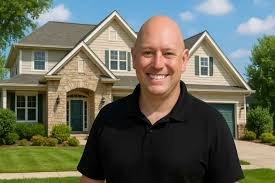
Picture this: a family in Garrisonville has spent months driving through neighborhoods, walking through open houses, and scrolling listings — and nothing quite fits. They want a specific layout, a home office that actually works, a backyard that backs to trees instead of another fence. They have found a lot in Aquia Harbour that feels exactly right. The vision is clear. But the moment they ask “how do we finance building a home from the ground up?” the conversation gets complicated fast.
Two loans. Two closings. A construction loan that converts to something else. Interest-only payments. Draw schedules. Builder approvals. It sounds like a financing puzzle with too many pieces — and for many Stafford County families, that complexity alone is enough to abandon the idea of building and settle for an existing home that checks most, but not all, of the boxes.
Here is the good news: there is a loan structure designed specifically to cut through that complexity. A construction-to-permanent loan combines the financing for your home’s construction phase and your long-term mortgage into a single transaction — one application, one closing, one set of closing costs. By the time your certificate of occupancy is issued, your permanent mortgage is already in place. No second closing, no re-qualifying, no scrambling for a new loan while your builder is handing you the keys.
Duane Buziak has been helping Stafford County families navigate mortgage decisions since 2014. As a mortgage broker working with hundreds of wholesale lenders rather than a single bank’s product shelf, Duane can match buyers to construction-to-permanent programs that fit their specific situation — whether that is a conventional loan for a custom build in North Stafford, an FHA one-time close for a buyer with a smaller down payment, or a VA one-time close option worth exploring for eligible veterans and active-duty service members near MCB Quantico.
This article walks through exactly how construction-to-permanent loans work, what it takes to qualify in Stafford County, how the draw and inspection process protects you during the build, and how to decide whether this financing structure fits your plans.
One Loan, Two Phases: The Mechanics Behind a Construction-to-Permanent Loan
The name tells you most of what you need to know. A construction-to-permanent loan has two distinct phases that operate under a single loan agreement, established at a single closing.
Phase One: The Construction Draw Period. Once your loan closes and your builder breaks ground, the lender does not hand over a lump sum. Instead, funds are released in stages called draws, tied to verified construction milestones. Your builder completes a phase of work — say, the foundation — an independent inspector confirms it, and the lender releases the corresponding funds. This continues through framing, rough-in mechanical work, drywall, and final completion. The draw period typically runs six to twelve months, depending on the scope of the build and the builder’s timeline.
During this phase, you pay interest only on the amount that has actually been drawn, not the full loan amount. This is an important distinction. If you are building a $550,000 home in Stafford County and your builder has drawn $180,000 to date, your monthly interest-only payment is calculated on $180,000 — not $550,000. That keeps your carrying costs manageable while the home is under construction, especially if you are also paying rent or a mortgage on your current residence.
Phase Two: The Permanent Mortgage. When construction is complete and the certificate of occupancy is issued, the loan automatically converts to a standard permanent mortgage. The terms of that permanent mortgage — rate, loan type, amortization schedule — were established at the original closing. There is no new application, no new appraisal, no second round of closing costs. You simply transition from interest-only construction payments to full principal-and-interest mortgage payments.
This is the core advantage over the alternative: a two-close construction loan. With a two-close structure, a borrower takes out a standalone construction loan to fund the build, then refinances into a permanent mortgage after completion. That means two separate applications, two appraisals, two closings with two sets of closing costs, and a full re-qualification event at the end of construction. If your financial picture has changed during the build — a job change, a shift in credit, a change in income — that re-qualification can become a problem. The one-close construction-to-permanent loan eliminates that risk entirely.
For a Stafford County family building in Embrey Mill or along the England Run corridor, the single-close structure is not just a convenience. It is a meaningful financial protection.
Qualification Criteria for Stafford County Buyers Planning a Custom Build
Construction-to-permanent loans carry a more involved qualification process than a standard purchase mortgage. Understanding the requirements upfront — before you sign a lot contract or shake hands with a builder — saves significant time and frustration.
Builder Approval. The builder you choose must meet lender requirements. This typically means the builder is licensed in Virginia, carries general liability and workers’ compensation insurance, and has a verifiable track record of completed projects. Many lenders also require the builder to be pre-approved on their approved builder list before the loan can proceed. The contract between you and your builder must be a fixed-price contract — not a cost-plus arrangement — so the lender has a reliable total project cost to underwrite against.
This is one of the most common friction points Duane encounters. A Stafford County buyer falls in love with a smaller local builder, signs a preliminary agreement, and then discovers the builder does not meet the lender’s requirements or is not willing to use a fixed-price contract structure. Working with Duane early in the process — before contracts are signed — means your builder relationship gets vetted against real lender standards before anyone is committed.
The Subject-to-Completion Appraisal. Because the home does not yet exist, the appraisal is based on what the completed home will be worth, using your plans, specifications, and comparable sales of similar completed homes in the area. This “as-completed” value is what determines your loan-to-value ratio. If comparable completed homes in North Stafford are supporting the value you need, the appraisal works in your favor. If your build specifications are significantly above neighborhood norms, the appraised value may come in lower than your total project cost — and that gap is yours to cover.
Lot Equity as a Down Payment Asset. If you already own the lot where you plan to build, the equity in that lot can often count toward your down payment requirement. A Stafford County buyer who purchased a lot in Rockhill or Aquia Harbour for $120,000 and is now building a $575,000 total project may be able to apply that lot equity toward the required down payment, reducing the cash needed at closing.
Credit and Reserves. Conventional construction-to-permanent loans generally require stronger credit profiles than standard purchase mortgages. Lenders also look closely at cash reserves — funds you have available beyond the down payment and closing costs — because construction projects carry inherent uncertainty. A realistic reserve cushion matters here.
For buyers who do not qualify for a conventional construction loan, HUD’s FHA one-time close construction loan offers a lower down payment path. Eligible veterans and active-duty service members near MCB Quantico should ask Duane specifically about the VA one-time close construction loan option — a specialized program that is not offered by every lender, but worth exploring if you have VA entitlement available.
The Draw Schedule: How Your Builder Gets Paid and How You Stay Protected
The draw process is the operational heartbeat of a construction-to-permanent loan — and it is also your primary protection against construction problems.
At each major milestone in the build, your builder submits a draw request to the lender. Before funds are released, an independent third-party inspector visits the site to verify that the work described in the draw request has actually been completed to the required standard. This is not a rubber stamp. If the inspector finds incomplete work, the draw is held until the deficiency is resolved. The inspector’s job is to protect the lender’s collateral — and in doing so, protects your investment as well.
Typical draw milestones for a Stafford County custom build might include: lot preparation and foundation, framing and roofing, rough-in plumbing and electrical, insulation and drywall, interior finishes and fixtures, and final completion. Each milestone triggers an inspection, and each approved inspection triggers a disbursement. Your builder is paid for work completed, not work planned.
What Happens If Construction Stalls or Costs Overrun. Fixed-price contracts exist precisely to protect against budget overruns becoming your problem — the builder absorbs cost increases within the contract amount. However, scope changes you request after the contract is signed can create additional costs that fall outside the original loan amount. This is why it is critical to finalize your plans and specifications as completely as possible before closing.
Most construction-to-permanent programs include a contingency reserve — typically a percentage of the construction budget — held back to cover unexpected legitimate costs. If the build finishes on budget, that reserve is applied to reduce the permanent loan balance. If the construction timeline extends beyond the original draw period, lenders can often grant extensions, though this should be discussed with Duane proactively rather than reactively.
Your Role During Construction. This is not a passive process. You will need to stay in communication with your builder, review draw requests before they are submitted, keep records of any change orders, and maintain contact with the loan servicer throughout the build. Families building in Garrisonville or North Stafford who treat the construction phase as a hands-off waiting period often find themselves surprised by the administrative involvement required. Being engaged protects you.
Conversion Day: From Construction Loan to Permanent Mortgage
After months of inspections, draw requests, and watching your home take shape on a Stafford County lot, conversion day is straightforward — by design.
When your builder achieves final completion and Stafford County issues the certificate of occupancy, the final draw inspection is completed, the remaining funds are disbursed, and the loan automatically converts to the permanent mortgage terms that were locked at your original closing. There is no new application, no new underwriting, no second closing table. The permanent mortgage you agreed to at the beginning is the mortgage you now have.
Rate Lock Strategy: A Decision That Matters. Some construction-to-permanent programs allow you to lock your permanent mortgage rate at the initial closing, protecting you against rate increases during the construction period. Others float the rate until conversion, which could work in your favor if rates drop during the build — or against you if they rise.
In a Stafford County market where custom build timelines can stretch from six months to over a year, the rate lock decision carries real financial weight. Locking at closing gives you certainty and protection. Floating introduces risk but preserves potential upside. There is no universally correct answer — it depends on your risk tolerance, your read on the rate environment, and the specific program terms available to you. This is exactly the kind of conversation Duane has with buyers early in the process, so the decision is made deliberately rather than by default.
What Your Permanent Mortgage Looks Like Post-Conversion. Once the loan converts, your monthly payment shifts from interest-only on the drawn balance to full principal-and-interest payments on the total loan amount. Your lender establishes an escrow account for Stafford County real estate taxes and homeowners insurance. From this point forward, your construction-to-permanent loan functions identically to any other conventional, FHA, or VA mortgage. You are a homeowner with a standard mortgage — the construction complexity is behind you.
It is worth noting that if you financed with a conventional construction-to-permanent loan, conventional cash-out refinancing at a later date is capped at 90% LTV. VA-eligible borrowers who used a VA one-time close may access VA cash-out refinancing up to 100% LTV if needed in the future.
Construction-to-Permanent Loans vs. Buying an Existing Stafford Home: A Practical Comparison
Building a custom home in Stafford County offers something an existing home purchase simply cannot: the ability to design a home that fits your life precisely, on a lot you have chosen, in a community you want. A lot in Rockhill with mature trees and a specific orientation. A floor plan built around how your family actually lives. Finishes and fixtures chosen by you, not by a builder’s standard package from three years ago.
But that customization comes with trade-offs that deserve an honest look.
Time. From lot purchase through construction completion and conversion, Stafford County buyers should realistically plan for twelve to eighteen months before move-in. A standard home purchase in an existing neighborhood can close in thirty to forty-five days. For families with flexibility, that timeline is manageable. For active-duty service members at MCB Quantico facing PCS orders, a twelve-to-eighteen month build timeline is a genuine constraint that may make construction financing the wrong tool for right now. This is not a reason to abandon the idea of building — it is a reason to plan the timing carefully.
Lender Oversight. Buying an existing home involves one appraisal and one closing. Building involves a subject-to-completion appraisal, multiple draw inspections, ongoing communication with the loan servicer, and active management of the construction process. Buyers who prefer a simpler transaction will find existing home purchases less demanding.
Financial Reserves. Construction-to-permanent loans require stronger reserves than standard purchase mortgages. Unexpected costs, temporary carrying costs during the build, and the general uncertainty of construction make a healthy reserve cushion important.
The table below summarizes the key differences between a construction-to-permanent loan and a standard purchase mortgage for an existing home in Stafford County.
| Feature | Construction-to-Permanent Loan | Standard Purchase Mortgage (Existing Home) |
|---|---|---|
| Number of Closings | One closing | One closing |
| Down Payment | Typically higher; lot equity may apply | Varies by loan type (3%–20%+) |
| Rate Lock | At initial closing or at conversion (program-dependent) | At closing |
| Draw Process | Yes — funds released in stages with inspections | No — full funds disbursed at closing |
| Timeline to Move-In | 12–18 months (lot to certificate of occupancy) | 30–45 days from contract to close |
| Builder Requirement | Yes — licensed, insured, lender-approved, fixed-price contract | No |
| Appraisal Basis | As-completed value (plans and specs) | Current market value of existing home |
| Re-Qualification at Conversion | Not required — one-time qualification | N/A |
Putting It All Together: Is a Construction-to-Permanent Loan Right for Your Stafford County Plans?
A construction-to-permanent loan is a genuinely powerful tool — but it is the right tool for a specific kind of buyer, not every buyer.
The ideal candidate is a Stafford County buyer who has identified a specific lot (in Aquia Harbour, England Run, Garrisonville, or another Stafford community), has a licensed and insurable builder relationship in place or is ready to establish one, has a credit profile and reserve position that supports the stronger qualification requirements, and wants to build a custom home without the complexity and cost of two separate closings. This buyer has time — twelve to eighteen months of timeline flexibility — and is prepared to be an active participant in the construction process, not a passive observer.
Who may not be the right fit right now: Active-duty service members at Quantico with PCS orders arriving in the next twelve months face a real timing conflict with a custom build. Buyers whose credit profiles need work before they can qualify for a conventional construction loan should focus on credit restoration first — Duane offers credit restoration support as part of the broader planning conversation. Buyers who have not yet identified a builder or a lot are not ready to apply, but they are absolutely ready to have a planning conversation.
If you are in Stafford County and the idea of building your own home has been sitting in the back of your mind, the best next step is a no-pressure conversation about whether the numbers and timeline work for your situation. Connect with Duane Buziak today at 540-870-5594 to talk through construction financing options — whether you are ready to break ground or just beginning to explore what building in Stafford County could look like for your family.
The Bottom Line on Construction Financing in Stafford County
A construction-to-permanent loan is not a niche product for a narrow slice of buyers. For Stafford County families who want to build on a specific lot, in a specific community, with a floor plan designed around their actual lives, it is often the most efficient path from empty land to front door key — precisely because it eliminates the second closing, the re-qualification risk, and the dual-loan complexity that used to make construction financing feel out of reach.
The nuance is real. Builder approval requirements, subject-to-completion appraisals, draw schedules, rate lock decisions, and construction timelines all require careful navigation. That is where working with a mortgage broker — not a single-product bank — makes a measurable difference. As a broker, Duane Buziak accesses programs from hundreds of wholesale lenders to find construction-to-permanent options that fit your specific project, lot, and financial profile.
Duane has been helping Stafford County families find their homes since 2014. Whether your plans involve a lot in Rockhill, a custom build in North Stafford, or a VA one-time close worth exploring for a Quantico-area veteran, the conversation starts the same way: with your situation, your timeline, and a clear picture of what is actually possible.
Call 540-870-5594 or Connect with Duane Buziak today to get started.