
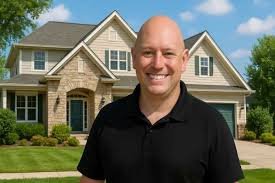
Buying acreage in rural North Stafford or on the Rockhill and Aquia Harbour edges is a different transaction from buying a house in Embrey Mill, and the loan you choose can decide whether the deal closes. Land value, outbuildings, wells, septic systems, and any farm income all change how a property is underwritten. Duane Buziak, a mortgage broker helping families find their new homes in Stafford County since 2014, places home loans, not farm credit. These seven strategies show how to structure a farmland mortgage or agricultural property loan, and where a home-loan broker’s role ends and an agricultural lender’s begins.
1. Classify the Property: Residential Acreage vs. Working Farm
Every other decision follows from one question: will the property be underwritten as a home with land, or as an income-producing agricultural property? Residential programs like VA, FHA, and conventional loans assume the dwelling is the main source of value and the borrower’s income pays the mortgage. Once the land, the crops, or the livestock carry the value, the file moves toward agricultural lending, which is a different product with different underwriters.
Consider an illustration. A 5-acre homesite off Garrisonville Road with a small horse shed and a fenced paddock reads as a residence with land. A 60-acre hay operation with equipment sheds and sales to local horse owners reads as a farm. The first fits residential financing. The second likely needs an agricultural lender, because the appraiser will weigh the land and the operation, not just the house.
To put this into practice:
- Collect the acreage, the number and type of outbuildings, current use, and any income the land produces.
- Note how the seller describes the property in the listing and whether any part is leased or farmed by a third party.
- Share all of it with Duane Buziak before you write an offer, so the loan path is matched to what the appraisal is likely to say.
- Check the parcel’s zoning and allowed uses with Stafford County Planning and Zoning.
The common mistake is assuming any loan can finance any acreage, then learning mid-contract that the land value or farm use disqualifies the property. By then you may be days from the end of your inspection period with no workable financing.
Measure success by whether the contract and loan path are matched in writing before the inspection period ends, and whether the appraisal arrives without a reclassification surprise.
2. Use a VA Loan on a Primary Residence With Acreage
For eligible service members and veterans commuting to MCB Quantico, VA entitlement is often the strongest tool for a rural home. The mechanism is the VA guarantee: with full entitlement, there is no VA loan limit and no down payment is required. The catch is the property. VA finances a primary residence, so the land has to remain incidental to the home, and the property has to meet VA minimum property requirements. A working farm or income-producing land does not fit.
Here is an illustration, not a quote. A Marine stationed at Quantico wants a rural home in North Stafford and has used part of their entitlement on a prior VA loan, say $60,000 of it. The county limit matters in that case. As of 2026, the FHFA baseline conforming limit is $832,750, and high-cost areas such as Stafford, which sits in the Washington metro area, go up to a ceiling of $1,249,125. VA uses the same county limits for partial entitlement, and you should confirm the current figure on the VA loan limits page. The math runs like this:
- 25% of $1,249,125 is about $312,281 in maximum guarantee.
- Subtract the $60,000 already used: about $252,281 remains.
- Multiply by 4 for the no-down-payment limit: roughly $1,009,125.
To put this into practice, request your Certificate of Eligibility through the VA home loan program portal using your SSN and date of birth, document remaining entitlement, and ask Duane Buziak to review the listing for VA minimum property issues before you tour. If the home is a VA cash-out refinance candidate later, the maximum is 100% LTV, but that is a separate conversation.
The common mistakes are assuming VA will finance a working farm, and ignoring entitlement still tied up in a prior VA loan. Measure progress by a received COE, a documented entitlement figure, and a VA appraisal that raises no acreage or use objections.
3. Structure a Conventional Loan Around Acreage Limits
Conventional financing can work well for a home on a larger lot, but underwriters and appraisers look at how much of the value sits in the land rather than the dwelling. When the land share is high, or the lot is large for the area, lenders may restrict the loan or ask for more down payment. The structure you choose, mainly your loan-to-value ratio, is the lever you control. Conventional maximum LTV on cash-out is 90%, and purchase scenarios should be modeled with equity to spare when land is significant.
A worked example
Suppose a buyer in North Stafford is weighing a 10-acre parcel with an existing home at $650,000. This price is an illustration, not a Stafford market statistic. Using an assumed 6.5% rate on a 30-year fixed loan, principal and interest only:
- 10% down ($65,000): loan of $585,000, about $3,698 a month.
- 20% down ($130,000): loan of $520,000, about $3,287 a month.
These figures exclude taxes, insurance, and mortgage insurance, and the rate is an assumption, not an APR or a quote. Your actual rate and APR depend on credit, property, and market conditions. The roughly $411 monthly difference is why comparing down payment levels early matters, especially if the appraiser assigns heavy value to the land.
To put this into practice, confirm the acreage and the land-to-dwelling value split using the appraiser’s comparable sales, keep LTV at or below 90%, and compare rate and mortgage insurance scenarios side by side. The FHFA publishes the annual conforming limits you will be measured against.
The common mistake is planning around the minimum down payment without checking how the appraisal splits value. Measure whether the appraised value supports your planned LTV and whether the monthly payment stays inside your target debt-to-income ratio.
4. Consider FHA Financing for Smaller Rural Homesteads
FHA suits buyers who need a lower down payment or more flexibility on credit, and it can work for a modest home with a few acres. It is not designed for farms. The mechanism is government insurance on the loan, which lets approved lenders accept lower credit scores and smaller down payments than many conventional programs. In exchange, FHA sets property condition standards and charges mortgage insurance premiums.
For an illustration, imagine a first-time buyer near Rockhill purchasing a modest home on three acres. The land is mostly lawn and woods, there is no income from it, and the buyer wants to keep cash for moving costs and reserves. FHA is a reasonable fit here in a way it would not be for a 40-acre cattle parcel.
To put this into practice:
- Look up the current FHA limit for Stafford County on HUD’s FHA loan limit lookup as of 2026.
- Review the property condition standards, including the home’s roof, heating, and any peeling paint on older construction.
- Confirm the well and septic situation, since FHA expects safe water and a functioning sewage system.
- Price the upfront and monthly mortgage insurance into your payment.
The common mistake is overlooking FHA condition requirements on older rural homes, which can produce repair demands late in the process, sometimes from a seller who cannot or will not pay for them. Ask for a thorough inspection early and walk the property with that list in mind. Measure whether the FHA appraisal clears with no required repairs beyond your budget, and whether the total monthly payment, mortgage insurance included, stays within plan.
5. Buy the Land and Build: Construction and Lot Financing
Raw land and construction loans do not follow purchase-loan rules. Lenders see vacant land as higher risk because there is no finished house to secure the loan, so down payments are typically larger and terms shorter. Construction financing pays the builder in draws as work is completed and inspected, rather than in one lump at closing.
Take an illustration. A family buys acreage in western Stafford and plans a construction-to-permanent loan to build a home. Their timeline depends on county permitting and on septic approval, which in Virginia runs through the local health department. A one-close structure converts the construction loan into the permanent mortgage automatically. A two-close structure ends the construction loan and starts a new mortgage, with two sets of costs but more flexibility to shop the permanent loan.
To put this into practice:
- Confirm zoning and buildability with Stafford County before you close on the land.
- Get septic (perc) and well feasibility evaluated, because they determine whether a house can go on the parcel at all.
- Obtain the builder’s contract, budget, and schedule, then map the draw schedule against it.
- Compare one-close and two-close structures with Duane Buziak, including the cost of extended timelines.
The common mistake is closing on land before verifying it can be built on, leaving a buyer with an unusable parcel and a separate loan to repay. Make the purchase contract contingent on feasibility. Measure success by having permits, septic approval, and the builder budget confirmed before land closing, and by draws that fund on schedule.
6. Pair a Home Loan With Separate Agricultural Financing
Many Stafford buyers want both a house and a small operation: hay, a few head of cattle, horses boarded for neighbors. The cleanest approach is to finance the residence with a home loan and keep barns, equipment, and operating needs on a separate agricultural credit track. Duane Buziak is a mortgage broker, so the home loan is where his role sits. Farm credit, operating lines, and equipment financing come from agricultural lenders who underwrite the business itself.
Illustrate it this way: a family buys a house with 12 acres and a small hay operation. The mortgage covers the residence, qualified on the household’s income. Equipment and seasonal costs are handled by an agricultural lender that reviews farm records, not pay stubs.
To put this into practice:
- Separate household and business budgets before applying anywhere.
- Ask Duane Buziak exactly where the home-loan scope ends for your property.
- Gather farm financial records, such as tax returns, income and expense statements, and equipment lists, for the agricultural lender.
- Sequence the applications so the home loan is not disrupted by new farm debt inquiries.
The common mistake is mixing personal and farm debt in one application. It can complicate qualifying and push your debt-to-income ratio past what the household can support, even if the farm is healthy. Measure whether household DTI qualifies on its own, and whether the farm financing plan is in place before closing, not after.
7. Prepare Credit, Income, and Documentation Before You Tour Acreage
Rural purchases add costs and paperwork that a typical subdivision purchase does not: well and septic testing, larger insurance premiums, sometimes longer appraisals. Strong credit and documented reserves absorb those surprises. A generic pre-approval often assumes a standard suburban house, which is why one built for a specific property type is more useful when you are bidding on acreage.
Illustrate with a Quantico DoD employee who spends several months on credit restoration and reserve building before touring acreage. By the time they find a property, their credit is stronger, their reserves are documented, and they enter contract with a pre-approval tied to the kind of property they are buying.
To put this into practice:
- Collect your LES or W-2s, tax returns if you have self-employment or farm income, and recent bank statements.
- Run a credit review with Duane Buziak, and begin credit restoration if the numbers call for it.
- Get insurance quotes for rural homes, since premiums can differ from town properties.
- Budget for well and septic inspections, which are often separate from the standard home inspection.
The common mistake is relying on a pre-approval that ignores acreage, well, septic, or insurance costs, then discovering the payment is higher than expected. Measure whether your target credit score is reached, reserves are documented, and the pre-approval names the property type you are pursuing.
Where to Start Before You Make an Offer on Stafford Acreage
Start with strategy one. Classifying the property decides everything after it: a home with land opens the VA, conventional, and FHA paths, while a working farm points toward agricultural lending. If the property will be your primary residence, match it to VA first when you are eligible, since it can mean no down payment, and to conventional financing when you want more room to structure around land value. If you plan to build, treat feasibility as a gate before any land closing. And keep farm debt on its own track.
The worst time to find out your loan does not fit the land is after you are under contract. Call 540-870-5594 and talk it through first.
Your dream home in Stafford County is closer than you think, with personalized mortgage solutions and local expertise that puts your family’s needs first. Connect with Duane Buziak today to explore flexible home loan options, discover competitive rates, and get the trusted guidance that’s earned recognition as one of Virginia’s top mortgage professionals. Stafford Mortgage by Duane Buziak is ready to build a personalized mortgage plan before you write an offer.