
Financing a manufactured home in Stafford County works differently from financing a site-built house. The deciding question is whether the home counts as real property or personal property. A home that qualifies as real property can use mortgage programs: conventional, VA, and FHA. A home that doesn’t is usually limited to a personal-property loan, which tends to cost more and run shorter. Many buyers assume manufactured homes can’t get a mortgage at all. Others assume every broker or lender offers every program. Neither is true.
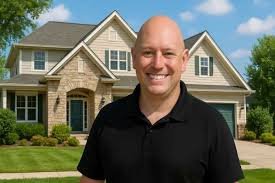
Duane Buziak, a mortgage broker helping families find their new homes since 2014, works with Stafford buyers who are Marines and DoD commuters near MCB Quantico and first-time buyers in North Stafford. The seven strategies below follow the order that matters: the real-property test first, then the loan type, then the lot and your preparation. All rate and payment figures are illustrations, not quotes, and programs change, so confirm current terms before you rely on them.
1. Confirm the Home Qualifies as Real Property
Start with a pair of homes. Suppose you tour a 2008 manufactured home in a Stafford community. It has the HUD label on the exterior of each section, a matching data plate inside, and an engineer’s certification that the foundation meets HUD’s permanent foundation standards. Mortgage programs are open to it. Now suppose a second home looks similar but the labels were removed and no foundation paperwork exists. That home is probably limited to personal-property financing, whatever it looks like from the driveway.
The mechanism is simple. Mortgage programs, including VA, FHA, and conventional, require a home built to the federal HUD Code (the construction standard in effect since June 15, 1976) that is permanently affixed to land the borrower owns. Without the label, the foundation, and the land, the home can’t be treated as real estate, so the mortgage rules don’t apply. HUD explains the code and labeling on its manufactured housing program page.
To put this into practice:
- Ask the seller for photos of the HUD label on each section and the data plate.
- Request the foundation certification, the deed, and a current survey.
- Have Duane Buziak review the package before you write an offer, so eligibility is a written answer rather than a guess.
- Confirm with Stafford County Planning and Zoning that the placement is permitted. Also ask your title company how the home’s state title is handled so it is conveyed and taxed as real estate.
The common mistake is making an offer first and checking the label and foundation later. If the paperwork fails, you are either in a contract you can’t finance or negotiating from weakness. Measure this strategy by whether you hold every document and a written eligibility decision before your contract’s financing deadline.
2. Use a Conventional Manufactured Housing Program
Fannie Mae’s MH Advantage and Freddie Mac’s CHOICEHome are conventional programs for manufactured homes built with site-built features, such as design and construction standards beyond the HUD Code. The mechanism is pricing: because these homes are built to stricter standards and tend to hold value like conventional houses, the loan terms can look much like a regular conventional mortgage, often with PMI that can be removed once you reach 80 percent loan-to-value.
Consider an illustration. A dual-income household with 740-range credit buys a qualifying new home on an owned lot near the Embrey Mill area for $340,000. With 5 percent down ($17,000), the loan is $323,000. At an assumed 6.50 percent for 30 years, principal and interest is about $2,042, and PMI at an assumed 0.45 percent adds about $121, for roughly $2,163 a month. The FHA alternative at 3.5 percent down, with an assumed 6.25 percent rate, a financed upfront premium of 1.75 percent, and annual MIP of 0.55 percent, comes to about $2,206. Conventional is about $43 a month lower here, and its PMI can end while FHA’s usually does not. With a lower score, the comparison can flip.
These rates are assumptions for illustration, not quotes. Your rate, and the APR, which will be higher than the note rate once mortgage insurance and fees are counted, depend on your credit, down payment, and the lenders available that day.
Steps:
- Ask the builder or dealer whether the specific home is eligible for MH Advantage or CHOICEHome, in writing.
- Review your credit and down payment with Duane Buziak.
- Request a side-by-side quote against FHA.
The common mistake is assuming any manufactured home fits the program. Eligibility attaches to the home’s design and construction, not just the borrower. Measure the quoted rate and total monthly payment against the FHA alternative.
3. Use the VA Loan for Manufactured Homes
This is the strategy for veterans and service members, including Quantico commuters, and it corrects a common myth: VA loans can be used for manufactured homes. The home must be eligible: HUD Code compliant, permanently affixed, and treated as real property on land you own. The VA guarantees a portion of the loan, which is why a no-down-payment purchase is possible. See VA’s home loan overview for current program rules.
Entitlement is the number to understand. Suppose a Marine at MCB Quantico used part of their entitlement on an earlier VA loan that wasn’t fully restored. For this illustration, assume a 2026 county limit of $1,249,125 (Duane Buziak confirms the real figure for Stafford against VA’s published loan limits). The chain runs like this:
- 25 percent of $1,249,125 is $312,281.
- Subtract $60,000 of assumed used entitlement: $252,281 remains.
- Multiply by 4: about $1,009,125 is the no-down-payment limit.
A manufactured home purchase usually sits far below that ceiling, so entitlement rarely blocks the deal. It matters more when a lot, site work, and a home are financed together, or when the limit is lower. A VA funding fee also applies unless you’re exempt, for example due to a service-connected disability rating; see VA’s funding fee page.
In practice, Duane Buziak pulls your Certificate of Eligibility electronically, using your Social Security number and date of birth, confirms remaining entitlement, then checks the home against VA property requirements before you commit. The common mistakes are assuming VA can’t be used, or forgetting the entitlement tied up in a prior VA loan. Measure two figures: your remaining entitlement and the resulting no-down-payment purchase limit.
4. Consider an FHA Manufactured Home Loan
FHA’s Title II program insures loans on manufactured homes that meet HUD’s foundation and title rules. The mechanism is the insurance: because HUD backs the loan, lenders accept lower credit scores and smaller down payments than many conventional programs. As of 2026, the standard minimums are 3.5 percent down with a 580 score or higher, and 10 percent down for scores of 500 to 579, though individual lenders can set stricter overlays. HUD’s single family housing pages carry the current rules.
Take an illustration for a first-time buyer in North Stafford with a 640 score and a $300,000 home-and-lot purchase. FHA at 3.5 percent down is $10,500, a base loan of $289,500, and a financed upfront premium of 1.75 percent ($5,066) for a $294,566 loan. At an assumed 6.50 percent, principal and interest is about $1,862, and annual MIP at 0.55 percent adds about $133, for roughly $1,995 a month. A conventional loan at 5 percent down with an assumed 7.00 percent rate and 1.5 percent PMI for the weaker score comes to about $2,252. FHA wins by about $258 a month in this scenario. Rates here are assumptions, not offers; actual APR will be higher.
Steps: gather the HUD label and foundation certification, review your credit with Duane Buziak, and run the complete payment including MIP, not just principal and interest.
The pitfall is the mortgage insurance cost over the life of the loan. With less than 10 percent down, FHA’s annual premium generally lasts for the full term, so plan a refinance into conventional once your equity and score allow. Measure total monthly payment and how many approval conditions you have cleared.
5. Buy Home and Land Together or Finance the Lot First
Lot ownership decides which path makes sense, and the arithmetic differs sharply. If you already own land, the equity can serve as your down payment on a new home. If you don’t, a combined loan for the home and land together keeps both under one mortgage, one appraisal, and one closing.
Suppose a Rockhill owner holds a $85,000 lot free and clear and plans a $215,000 new home, a $300,000 project. Counting the lot equity, the loan is about $215,000. At an assumed 6.50 percent for 30 years, that is roughly $1,359 a month in principal and interest. Buying a comparable $300,000 home-and-lot package with 5 percent down means a $285,000 loan and about $1,801 a month, plus $15,000 cash. The lot equity is worth over $440 a month in this illustration. Site costs for utilities, the foundation, and installation still need to be in the budget, and not every program counts them the same way.
To compare:
- Order a survey of the lot.
- Have the title checked through the title services at Stafford Mortgage by Duane Buziak, so liens or easements surface early.
- Ask for written quotes for both paths, combined and staged.
The common mistake is closing on land with no plan for how the home will be financed. A bare lot can end up in a worse financing position than the finished home would have been. Measure the cash needed at closing under each path, including site work.
6. Compare Chattel Loans Honestly
A chattel loan is a personal-property loan, secured by the home alone rather than by the home and land. It can be the only workable option when the home sits in a leased-lot community or lacks the paperwork to qualify as real property. The cost: chattel loans usually carry higher rates, shorter terms, and different fee structures than mortgages. The CFPB’s 2014 research on manufactured-housing finance found that personal-property loans generally priced above real-property mortgages; the agency’s homebuying resources explain the differences between loan types.
Suppose a buyer in a leased-lot community finds a $110,000 home with $10,000 down and a chattel quote of 9.50 percent over 20 years. The payment on $100,000 is about $932 a month. Over a five-year hold, that’s about $55,900 in payments, of which roughly $45,200 is interest and only about $10,700 reduces the balance. Compare that with a plan to buy land, install or move the home onto it, and refinance into a mortgage. That route takes more steps but can cut years of high-cost interest.
Collect more than one chattel quote and compare rate, term, and fees. Then map out how and when a mortgage refinance could replace it, since real-property status usually requires owning the land and meeting foundation rules.
The common mistake is treating a chattel rate as if it were a mortgage rate. They aren’t the same product, and the comparison should use APR. Measure APR and total interest over the period you actually expect to hold the home.
7. Prepare Credit, Down Payment, and Appraisal Early
Manufactured home appraisals lean heavily on comparable sales, and comparables can be thin. Credit problems and missing documents are the other two ways deals stall. Preparing early gives you time to fix what can be fixed before a contract deadline forces the issue.
For example, imagine a buyer who pulls their credit report three months before shopping and finds a collection account reported in error. They dispute it, and the score improves before the application. They also gather permit records and receipts for upgrades such as a deck or a new roof, so the appraiser has documentation, and they get homeowners insurance quotes to confirm the monthly payment holds.
- Pull your credit reports from all three bureaus and dispute any errors.
- Get homeowners insurance quotes on the specific home, since they affect your payment and debt ratio.
- Assemble income documents, the deed or purchase contract, and upgrade and permit records.
- Discuss no-out-of-pocket closing options with Duane Buziak, including how seller credits and lender credits can reduce cash at closing.
The common mistake is waiting until after contract to look at credit and insurance. Surprises then arrive when you have the least room to respond. Measure your credit score movement from first pull to application, and the appraised value against the contract price.
Manufactured home loan types compared at a glance
The figures below are typical ranges as of 2026. Lender overlays vary, so confirm current terms with Duane Buziak before relying on them.
| Loan type | Property must be real property? | Typical down payment (as of 2026) | Mortgage insurance or funding fee | Typical fit |
|---|---|---|---|---|
| Conventional (standard) | Yes | About 5 percent | PMI, removable at about 80 percent loan-to-value | Strong credit, owned lot |
| MH Advantage / CHOICEHome | Yes | About 3 to 5 percent, program dependent | PMI, removable | Qualifying new homes with site-built features |
| VA | Yes, permanently affixed | Often none | VA funding fee, waived for some veterans | Veterans and service members, including Quantico commuters |
| FHA Title II | Yes | 3.5 percent with 580 or higher | Upfront 1.75 percent plus annual MIP | Moderate credit, smaller down payment |
| Chattel (personal property) | No | Varies widely, often 5 to 10 percent or more | Usually none, but higher rates | Leased land or homes that don’t qualify as real property |
Manufactured home financing questions in Stafford, answered
Can you get a mortgage on a manufactured home in Stafford VA?
Yes, if the home qualifies as real property. That generally means a HUD Code home on a permanent foundation, on land you own, with the required documentation. Homes that don’t meet those tests are usually limited to personal-property loans.
Does a manufactured home need to be on a permanent foundation?
For VA, FHA, and conventional mortgages, yes. The foundation typically needs an engineer’s certification showing it meets HUD’s permanent foundation standards, and the home must be attached to land you own.
Can I use a VA loan for a manufactured home near Quantico?
Yes, if you are an eligible veteran or service member and the home is HUD Code compliant, permanently affixed, and real property. Your remaining entitlement and the VA property requirements both apply.
What is a chattel loan?
A chattel loan is a loan secured by the home as personal property, without the land. It is common in leased-lot communities, and it usually carries a higher rate and shorter term than a mortgage.
What is the difference between MH Advantage and a standard conventional loan?
MH Advantage is Fannie Mae’s conventional program for manufactured homes with site-built design and construction features. It can offer lower down payment options and pricing closer to a regular conventional loan, but only on qualifying homes.
Does FHA finance manufactured homes?
Yes. FHA Title II insures loans on manufactured homes that meet HUD’s foundation, title, and property standards, with flexible credit and down payment requirements and mortgage insurance premiums.
Can I refinance a manufactured home?
Often yes, when the home is real property and meets program rules. Eligible veterans may use a VA cash-out refinance up to 100 percent loan-to-value. A chattel loan can sometimes be refinanced into a mortgage once the home qualifies as real property.
How do I get my Certificate of Eligibility?
You can request it through VA.gov, or Duane Buziak can pull it electronically using your Social Security number and date of birth. VA explains the options on its COE page.
Where to start: the real-property check, then the loan that fits your profile
Start with strategy 1. Until you know the home is real property, no loan comparison means much. Then work through the loan types that fit you. Quantico veterans should look at the VA loan first, since the lower down payment and entitlement rules can change the whole budget. First-time buyers should compare FHA with a conventional manufactured housing program. Then settle the lot question and prepare your credit and documents. To talk through your own situation, call Duane Buziak, NMLS #1110647, at Stafford Mortgage by Duane Buziak, 540-870-5594.
Your dream home in Stafford County is closer than you think, with personalized mortgage solutions and local expertise that puts your family’s needs first. Connect with Duane Buziak today to explore flexible home loan options, discover competitive rates, and get the trusted guidance that’s earned recognition as one of Virginia’s top mortgage professionals.