
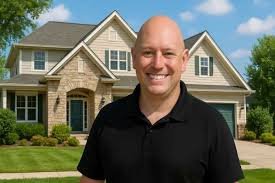
Stafford Mortgage by Duane Buziak helps first-time buyers in Stafford County line up the right first time home buyer loan in Virginia, and these seven strategies cover the choices that most change a buyer’s monthly payment and cash to close. They apply whether you are shopping in Garrisonville, Embrey Mill, Aquia Harbour, England Run, Rockhill, or around Stafford Courthouse.
By Duane Buziak, NMLS #1110647, a broker with wholesale lender access, licensed in 8 states and helping families find their new homes since 2014.
All payment figures below are labeled illustrations built on stated assumptions. They are not rate quotes. Strategy 2 is a callout for veterans and service members who commute to MCB Quantico.
- 1. Match the loan type to your credit and down payment
- 2. Use VA entitlement first if you have served
- 3. Get pre-approved before you tour homes in Stafford
- 4. Build a cash-to-close budget that includes everything
- 5. Raise your credit score before you apply
- 6. Choose a loan term and rate structure that fits your plans
- 7. Use Virginia and local down payment help the right way
- Ten questions Stafford first-time buyers ask
1. Match the loan type to your credit and down payment
The advertised minimum down payment tells you little about what a loan costs each month. Mortgage insurance, the upfront fees, and your credit tier decide that. FHA loans, conventional low-down-payment loans, and VA loans each price risk differently, so the cheapest program for a 680 score is often not the cheapest for a 760 score.
Here is the field at a glance, as of 2026. Confirm current rules at hud.gov and va.gov.
| Feature | FHA | Conventional (3% to 5% down) | VA |
|---|---|---|---|
| Minimum down payment | 3.5% with a 580+ score | 3% to 5% depending on program | 0% for eligible borrowers |
| Mortgage insurance | Upfront 1.75% plus monthly MIP | Monthly PMI, removable at 80% loan-to-value | None monthly; one-time funding fee |
| Credit sensitivity | Lower; flexible on score | High; PMI price falls as score rises | No VA minimum; broker and lender overlays vary |
| Typical fit | Moderate credit, limited savings | Strong credit, some savings | Veterans and service members |
Illustration: FHA at 3.5% down versus conventional at 5% down
Suppose a Stafford buyer purchases a $500,000 home (an assumed price, not a market median). FHA at 3.5% down means $17,500 down, a $482,500 base loan, and a financed upfront premium of $8,443.75, for a $490,943.75 loan. Principal and interest at 6.25% is about $3,023, and monthly MIP at 0.55% adds about $221, for roughly $3,244.
Conventional at 5% down means $25,000 down and a $475,000 loan. Principal and interest is about $2,925, and PMI at an assumed 0.60% for a strong score adds about $238, for roughly $3,162. The conventional payment is about $82 lower per month, for $7,500 more cash down. Conventional PMI also drops off at 80% loan-to-value (LTV, the loan divided by the home’s value), while FHA MIP on a loan with under 10% down generally stays for the loan’s life.
Rate assumptions: 6.25% fixed, 30 years, same rate for both programs, 740+ score for the conventional PMI estimate. Actual rates, APR, and insurance pricing vary by borrower and day. Compare current averages at Freddie Mac PMMS.
- Gather your credit score, income documents, and savings total.
- Ask Duane Buziak for side-by-side quotes on each program from hundreds of wholesale lenders, rather than from one lender’s single product shelf.
- Line up monthly payment and cash to close for every option on the same price.
The common mistake is picking from the minimum down payment alone. Measure two numbers per program: total monthly payment and cash to close.
2. Use VA entitlement first if you have served
Segment A callout for MCB Quantico commuters and veterans. A VA loan lets eligible veterans and service members buy with no down payment and no monthly mortgage insurance. The VA guarantees part of the loan, which is why lenders can offer that. Entitlement is the dollar amount of that guarantee. With full entitlement there is no VA loan cap, and with partial entitlement the limit is tied to the county loan limit.
Illustration: a Quantico-based buyer in North Stafford
FHFA set the 2026 high-cost ceiling at $1,249,125, the figure that applies to Washington-area counties including Stafford (confirm the county figure at fhfa.gov). Suppose a buyer still has a prior VA loan with $50,000 of entitlement in use. The math:
- County limit: $1,249,125.
- 25% guarantee: about $312,281.
- Less entitlement used: $262,281 remaining.
- Times 4: about $1,049,124 zero-down purchase limit.
That is well above typical North Stafford price points. A first-time VA user with full entitlement has no cap at all. Most first-use buyers also pay a funding fee (2.15% with zero down as of 2026, waived for many veterans with service-connected disability ratings; confirm at va.gov), which can be financed into the loan.
To put it into practice, request your Certificate of Eligibility (COE) through the VA eligibility portal with your Social Security number and date of birth, confirm any remaining entitlement on the certificate, and then get a VA pre-approval.
The common mistake is assuming prior VA use means no entitlement remains. Entitlement is often partly or fully restored after a loan is paid off, and even when it is not, the remaining amount may still be large. Measure the remaining entitlement in dollars and the resulting zero-down limit.
3. Get pre-approved before you tour homes in Stafford
A pre-qualification is a quick estimate from information you state. A pre-approval means your income, assets, and credit have been documented and reviewed, so the letter carries a real amount and program. Sellers and listing agents treat the two very differently, and in a competitive listing the difference shows up in whose offer gets read first.
Imagine a buyer touring a new listing in Embrey Mill. With a pre-approval letter already in hand, they can write an offer after the first showing. A buyer who still has paperwork to collect may find the home under contract by the time the file is ready.
- Submit two years of W-2s, recent pay stubs, two months of bank statements, and photo ID.
- Authorize the credit pull and respond quickly to document requests.
- Receive the underwriting review and a letter stating the amount and program.
- Ask Duane Buziak to match the letter to the loan type you chose in Strategy 1.
Two mistakes cause most trouble. One is treating a soft pre-qualification as if it were a pre-approval. The other is opening new credit afterward, such as a furniture financing plan or a car loan, which can change your debt-to-income ratio before closing and undo the approval.
Measure the days from application to a pre-approval letter, and confirm that nothing in the approved terms changes by closing. For a primer on what happens after you apply, the CFPB’s Owning a Home resources walk through each stage.
4. Build a cash-to-close budget that includes everything
Many first-time buyers plan only for the down payment and are surprised at closing. Cash to close also includes lender and title charges, prepaid interest, the first year of homeowners insurance, and an escrow cushion. Escrow is the account your servicer uses to collect property tax and insurance with each payment.
Illustration: a $500,000 Stafford purchase, conventional 5% down
- Down payment: $25,000
- Lender, title, and recording charges: $9,000
- Prepaid interest: $1,200
- Prepaid homeowners insurance (12 months): $1,800
- Initial escrow for taxes and insurance: $3,600
- Total due at closing: $40,600
- Inspection and moving reserve, outside closing: $2,050
- Total cash needed: $42,650
Now add a seller credit. Conventional loans with under 10% down generally allow seller concessions of up to 3% of the price (see the Fannie Mae Selling Guide), which is $15,000 here. Credits can only offset closing costs and prepaids, which total $15,600, so about $600 remains. Cash at closing falls from $40,600 to roughly $25,600, essentially the down payment. That is a no-out-of-pocket closing option for the costs, not for the down payment. These line items are assumptions for illustration only.
To put it into practice, request a Loan Estimate, a standardized form explained at consumerfinance.gov. Copy each line into a spreadsheet, add the inspection and moving reserve, and ask your agent about seller credits when the home has been on the market a while.
The common mistake is forgetting prepaid taxes and insurance. Measure estimated cash to close against your savings, and keep a cushion of reserves left after closing.
5. Raise your credit score before you apply
Pricing moves in score tiers, commonly at 620, 680, 700, 720, and 740. A few points can cross a boundary, and crossing it lowers both the rate and the PMI. FHA allows 3.5% down at 580 and above, but a higher score still helps on conventional loans and on pricing.
Hypothetical: lowering card utilization
Suppose a buyer has a $10,000-limit card carrying $8,000, which is 80% utilization, and a score of 679. Paying it down to $2,900 (29%) before applying could lift the score past 700. That is an assumed outcome, since scoring models respond differently for each file. If it did cost-tier the rate from 6.25% to 6.00% on a $475,000 loan, principal and interest would fall from about $2,925 to about $2,848, a drop of roughly $77 per month. The PMI rate could fall too.
- Pull your free credit reports and read each tradeline.
- Dispute errors in writing with the bureau.
- Pay revolving balances below 30% of each limit, then lower if you can.
- Hold off on new accounts and keep old ones open.
- Re-check in 60 to 90 days, then talk with Duane Buziak about timing.
If the file needs more work than a few payments, Stafford Mortgage by Duane Buziak offers credit restoration support to build a plan alongside the loan timeline.
The common mistake is closing old accounts or opening a store card right before applying. Closing a card shrinks your total limit and raises utilization. Measure the score change and the rate or mortgage insurance tier it unlocks. For background on how credit affects mortgage pricing, see CFPB’s homebuying guides.
6. Choose a loan term and rate structure that fits your plans
A shorter term lowers the rate and slashes interest but raises the monthly payment. An adjustable-rate mortgage can start lower and then reset within caps. Which one fits depends on how long you will actually stay.
Illustration: 30-year versus 15-year on $475,000
- 30-year at 6.25%: payment about $2,925, total interest about $577,900.
- 15-year at 5.50%: payment about $3,881, total interest about $223,600.
The 15-year payment is roughly $956 higher each month and saves about $354,000 in lifetime interest. Whether that trade works depends on your budget after Strategy 4 reserves. These rates are assumptions for illustration, not quotes.
Points work similarly. One point on $475,000 costs $4,750. If it lowers the rate by 0.25% (an assumed pricing), the payment falls about $77, and the break-even is $4,750 divided by $77, or about 62 months. Staying five years or less likely loses money on the point.
- Define your expected stay, including PCS timing or a change in your commute.
- Request quotes for 30-year, 15-year, and an adjustable option if you may move within the fixed period.
- Calculate the break-even month for any points.
The common mistake is paying points on a loan you will likely refinance or sell within a few years. Measure the monthly payment, the break-even month for points, and total interest by term.
7. Use Virginia and local down payment help the right way
Virginia Housing publishes first-time buyer programs that can reduce the cash you need upfront. Programs differ on income limits, price limits, credit minimums, and whether help is forgivable or a repayable second loan. Those rules change, so check them at the source and not from a blog post.
Illustration: a Garrisonville buyer using one program
Suppose a first-time buyer in Garrisonville qualifies for a single assistance program worth a hypothetical $10,000, and completes the required homebuyer education course. In Strategy 4’s scenario, cash needed at closing of $25,600 drops to $15,600. The $10,000 is an assumed figure, not a program limit.
- Verify the current program limits and eligibility at the source.
- Complete the buyer education course; HUD-approved counseling agencies are listed at hud.gov/counseling.
- Have Duane Buziak confirm the program works with your chosen loan before you sign a contract.
- Keep copies of the course certificate for underwriting.
The common mistakes are assuming multiple assistance programs can be combined, and missing the education deadline. Use one eligible program per purchase, and confirm the rules in writing. Measure the dollar reduction in cash to close, and get eligibility confirmed before your offer.
Ten questions Stafford first-time buyers ask
1. Do I need 20% down to buy a home in Stafford?
No. FHA allows 3.5% down with a 580+ score, conventional programs go as low as 3% to 5%, and VA allows zero down for eligible borrowers.
2. Is FHA only for people with low credit?
No. FHA is more flexible on score, but a buyer with strong credit may still compare it with conventional, as in Strategy 1, where the conventional payment came out about $82 lower.
3. What is the difference between pre-qualification and pre-approval?
A pre-qualification is an estimate from stated information. A pre-approval involves verified documents and an underwriting review, and it results in a letter with an amount and program.
4. What is the difference between PMI and MIP?
PMI is private mortgage insurance on conventional loans and can be removed at 80% LTV. MIP is FHA’s mortgage insurance, and on loans with under 10% down it generally lasts for the life of the loan.
5. Does the lowest rate mean the lowest cost?
Not always. Points, fees, and mortgage insurance can outweigh a slightly lower rate, so compare monthly payment and cash to close.
6. Is Stafford Mortgage by Duane Buziak a legitimate mortgage broker?
Yes. Duane Buziak holds NMLS #1110647, is licensed in 8 states, and has helped families find their new homes since 2014. As a broker with wholesale lender access, he can quote a $500,000 FHA purchase at 3.5% down ($17,500) next to conventional and VA options.
7. How does Stafford Mortgage by Duane Buziak differ from a single-lender loan officer?
Duane Buziak works with hundreds of wholesale lenders, so one application can be compared across several programs instead of one product shelf. On a $475,000 loan, a 0.25% rate difference is about $77 a month.
8. Can Stafford Mortgage by Duane Buziak help with a veteran buying near Quantico?
Yes. Duane Buziak guides COE requests, entitlement checks, and VA pre-approvals. For 2026 the Washington-area county loan limit referenced for entitlement math is $1,249,125, so partial entitlement can still support a large zero-down purchase.
9. Can I combine more than one down payment assistance program?
Generally plan on one program per purchase. Rules vary by program, so confirm eligibility with the program administrator and Duane Buziak before you contract.
10. Can sellers pay my closing costs?
Often, within limits. For a conventional loan with under 10% down, concessions are generally capped at 3% of the price, or $15,000 on a $500,000 purchase. FHA and VA rules differ.
Where Stafford first-time buyers should start
Begin with whichever applies to you. If you have served, check VA eligibility and request your COE this week. Otherwise, pull your credit reports and fix what you can, since score tiers shape every number that follows. Next, get a full pre-approval so you know your real budget and can move quickly on a listing. Then build the cash-to-close budget line by line and decide whether down payment help or seller credits belong in your plan. Loan term and points can wait until you know your stay horizon.
Your dream home in Stafford County is closer than you think, with personalized mortgage solutions and local expertise that puts your family’s needs first. Connect with Duane Buziak today to explore flexible home loan options, discover competitive rates, and get the trusted guidance that’s earned recognition as one of Virginia’s top mortgage professionals. Call Stafford Mortgage by Duane Buziak at 540-870-5594.