
A $480,000 construction-perm loan at 6.75% for 30 years carries estimated principal and interest of $3,113.28 per month. At 7.00%, that same loan is $3,193.25 – a $79.97 monthly difference and $4,798.20 more in scheduled payments over five years. Add a 1% origination fee of $4,800 and estimated third-party closing costs of $9,600 to $19,200, and the structure of your financing matters before the first foundation draw is released. This guide to construction perm loans is built for Stafford County buyers who want a clear plan before choosing land, a builder, and a mortgage broker.
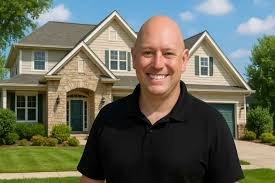
By Duane Buziak, NMLS #1110647
For buyers near Marine Corps Base Quantico, a new home can solve a recurring PCS problem: finding the right layout, timeline, and payment in a resale market with limited move-in-ready choices. For I-95 commuters in Stafford, Aquia Harbour, Garrisonville, and Fredericksburg, building can also make sense when resale inventory does not match the commute-price tradeoff. It is not automatically less expensive, though. Construction requires more documentation, more patience, and a realistic reserve cushion.
Table of Contents
- What a construction-perm loan does
- The one-close process from lot to move-in
- Costs, credit, reserves, and loan limits
- VA, conventional, FHA, and investor considerations
- Why a broker’s access can matter
- Questions Stafford buyers ask
What Is a Construction-Perm Loan?
A construction-perm loan, often called a one-time-close loan, finances the build and then converts into permanent mortgage financing when construction is complete. Instead of arranging construction financing now and a separate permanent mortgage later, the borrower completes one closing and has one approved permanent-loan structure.
During construction, funds are released in draws as work is completed and inspected. Payments are commonly interest-only on the amount disbursed, not on the entire approved loan balance. Once the home receives its certificate of occupancy, the loan transitions to regular principal-and-interest payments under the agreed permanent terms.
That rate protection is valuable when rates are volatile, but it comes with a trade-off. The broker and program provider must review the builder, contract, budget, plans, specifications, appraisal, borrower income, assets, and land details before closing. A change order that adds a screened porch or upgrades a kitchen can require fresh approval if it alters the budget or value.
How the One-Close Process Works
Start by separating the land decision from the house decision. If you already own a lot in Stafford County, its equity may count toward your required investment, subject to the program guidelines and appraisal. If you are buying the lot, the land acquisition can often be included in the same transaction.
Next comes builder approval. A qualified builder typically needs licensing, insurance, a construction contract, project history, and a clear draw schedule. Owner-builder arrangements are much more restrictive and are not available through every construction-perm option.
The appraisal is based primarily on the completed home, using plans, specifications, and comparable new construction when available. This is a key Stafford County issue: a home designed for a specific lot may not have an identical nearby comparable sale. A conservative appraisal can affect the maximum loan amount even when the construction budget is sound.
After closing, the draw administrator verifies each phase before releasing funds. Excavation, foundation, framing, mechanical work, drywall, and completion are common milestones. Build timelines commonly run 8 to 14 months, depending on permits, weather, materials, inspections, and the builder’s schedule. Do not schedule a lease end or PCS move around a best-case completion date alone.
Stafford County Numbers to Put in Your Budget
Stafford County’s median sale price was approximately $535,000 in August 2025, according to Redfin’s Stafford County housing market data. That benchmark matters because a custom build priced at $650,000 is not simply a $650,000 purchase. The appraised value, lot value, construction contract, contingency funds, and program loan-to-value limits must work together.
For 2025, the baseline conforming loan limit was $806,500 for a one-unit property. That means many Stafford County construction projects can remain within conforming financing limits, but a higher land-plus-build cost may require jumbo financing. Jumbo construction programs commonly expect stronger credit and more post-closing reserves.
Expect total closing costs and prepaid items to vary widely, but 2% to 5% of the loan amount is a practical planning range before seller or builder concessions, where permitted. On the $480,000 example, that is $9,600 to $24,000. Ask about our no-out-of-pocket closing options only after the rate, pricing credit, and long-term payment have been compared honestly.
Contingency money deserves its own line item. A 5% to 10% construction contingency on a $500,000 build contract is $25,000 to $50,000. It is not a casual upgrade fund. It is protection against legitimate project changes, site conditions, or cost adjustments allowed under the contract.
Credit, Income, and Reserve Requirements
There is no single credit score for every construction-perm program. Conventional construction financing often starts around a 680 FICO score, while stronger pricing and lower down-payment options may call for 700 or higher. VA construction options may allow lower scores through certain program providers, although many providers set their own credit floors. FHA construction financing can be useful for eligible buyers, but builder participation and property requirements narrow the field.
Reserves are also more important than on a standard resale purchase. Six months of total housing payments is a common target for a conventional construction file, while jumbo or higher-balance scenarios may require 9 to 12 months. A buyer with $5,000 in estimated monthly housing expense should plan for $30,000 in six months of reserves if the selected program requires it.
Self-employed buyers need clean documentation of income stability. Tax returns, business bank statements, profit-and-loss statements, and explanations for major deposits may all be relevant. Investors considering a DSCR construction path should understand that these options are less common than DSCR financing for completed rentals and may require larger down payments, higher credit, and additional liquidity.
A soft credit pull mortgage review can help you explore the likely path without immediately triggering a hard inquiry. Stafford Mortgage can provide a no hard inquiry mortgage pre approval conversation through NoTouch Credit Pull options, subject to program and credit-profile limits. A mortgage pre approval without hard pull is useful for early budgeting, but final approval normally requires full documentation and the credit review required by the selected program.
VA Construction Loans for Quantico-Area Buyers
Eligible veterans and active-duty buyers often ask whether a VA loan Stafford, VA option can fund a ground-up build. The answer is yes in the right program, but availability depends on approved builder requirements, credit, residual income, entitlement, and project structure. A VA construction-perm loan can be compelling because it may permit lower cash investment than many conventional build programs.
The funding fee, if applicable, must be included in the analysis rather than treated as an afterthought. A service-connected disability exemption can change the numbers materially. VA guidelines also emphasize residual income, which is especially relevant for military households managing family size, future assignments, or a spouse’s employment transition.
For commuter buyers without VA eligibility, conventional financing may offer more flexibility in property type, down payment, or rate structure. FHA may fit a buyer with a smaller down payment, but construction options are more specialized. The best path depends on the builder, the lot, your cash reserves, and the payment you can carry after the temporary interest-only phase ends.
Why Construction Buyers Benefit From Broker Access
A construction loan is not a commodity quote. The program must accept your builder, project type, property location, down payment source, and permanent financing plan. A mortgage broker can compare available program structures rather than force every file into a single shelf.
| Comparison point | Mortgage broker approach | Single-shelf mortgage model |
|---|---|---|
| Program access | Can review multiple available construction-perm options. | Limited to its own approved menu. |
| Typical FICO floors | Can compare overlays, often from 680 for conventional construction. | One set of internal overlays applies. |
| Program breadth | May include VA, conventional, FHA, jumbo, non-QM, and DSCR options. | Availability varies by its internal product shelf. |
| Pricing flexibility | Can compare rate, fee, credit, and lock structures across options. | Pricing is limited to one source’s offerings. |
| Builder fit | Can assess which available programs accept the builder and draw plan. | Builder approval must fit its own construction process. |
A soft pull mortgage broker review is not a promise of approval or a substitute for underwriting. It is, however, a practical first step for buyers who want a no credit hit mortgage application discussion before a lot contract creates pressure.
FAQ: Construction-Perm Loans in Stafford County
Can I buy land and build with one loan?
Yes. Many construction-perm programs can include a land purchase and build cost in one closing, provided the lot, builder, appraisal, and borrower profile meet guidelines.
What down payment is required for a construction-perm loan?
It depends on the program. Conventional projects often require meaningful borrower investment, while eligible VA borrowers may have lower-cash options. Lot equity may help meet the requirement.
Do I make full mortgage payments while the house is being built?
Usually no. During construction, payments are commonly interest-only on funds that have been drawn. Full principal-and-interest payments begin after conversion.
How long does construction financing take to close?
Plan for more time than a resale purchase. Builder approval, plans, appraisal, and draw administration can add weeks before closing, so early preparation matters.
Can I use a VA construction loan near Quantico?
Eligible buyers may be able to, provided an available VA construction program accepts the builder and project. Entitlement, residual income, credit, and funding-fee treatment all matter.
What credit score do I need?
Many conventional construction options begin around 680 FICO, while jumbo options may call for 700 or higher. Exact requirements depend on the selected program and overall file strength.
Is Stafford Mortgage legit for construction financing?
Stafford Mortgage works through Coast2Coast Mortgage and is guided by Duane Buziak, NMLS #1110647, a two-time VA Broker of the Year. Ask for the specific program terms, fees, credit requirements, and builder approval process for your project.
Can I start with a soft credit pull?
Yes, a soft-pull prequalification may help estimate your path without an immediate hard inquiry. A full credit review and underwriting documentation are still required before final approval.
Construction financing rewards preparation. Before signing a land contract or a builder agreement, make sure the payment works at the permanent rate, the contingency is real, and the timeline leaves room for ordinary construction delays.
Legal disclaimer: Mortgage programs, rates, fees, credit standards, reserve requirements, and eligibility are subject to change without notice and require approval. This article is for general educational purposes only and is not a commitment to make a loan. Equal Housing Opportunity. Not legal, tax, appraisal, or construction advice.
Duane Buziak | Mortgage Maestro | NMLS #1110647 | Coast2Coast Mortgage, LLC NMLS #376205 | Licensed in VA, FL, TN, GA & DC [Contact] | NoTouch Credit Pull available — no hard inquiry, no credit hit.