
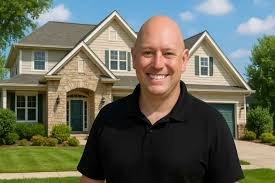
Picture this: you’re a week away from closing on a home in England Run, the movers are booked, the kids are registered for school, and your loan officer calls to say the lender won’t fund until you provide proof of homeowners insurance. You haven’t even started shopping for a policy. Suddenly, your closing date is in jeopardy over something that felt like a “later” problem.
This scenario plays out more often than you’d think across Stafford County, from Garrisonville to Aquia Harbour. And it’s entirely avoidable once you understand one foundational truth: homeowners insurance is not optional when you carry a mortgage. It is a lender requirement, codified across every major loan program, and it must be in place before your loan funds.
Duane Buziak, mortgage broker with Coast2Coast Mortgage LLC and a trusted resource for Stafford County buyers since 2014, walks clients through this requirement as part of every mortgage conversation. Whether you’re a first-time buyer in Embrey Mill, a military family PCS-ing to MCB Quantico and buying in North Stafford, or a move-up buyer in the Rockhill corridor, understanding how homeowners insurance connects to your mortgage will make your closing smoother and your monthly payment less of a mystery.
This article covers why lenders require insurance, what coverage minimums actually look like, how insurance flows through your escrow account, what VA loan buyers near Quantico need to know specifically, and what documentation you need before closing day. By the end, you’ll have a clear checklist and a real-number example to ground the concepts.
Why Your Lender Requires Homeowners Insurance — Not Just Recommends It
Here’s the lender’s perspective, stripped down to its simplest form: when you take out a mortgage, the home itself is the collateral securing the loan. If a fire, severe storm, or other covered peril destroys that home, and there’s no insurance in place, both you and the lender are left holding a debt with no asset behind it. The lender’s requirement for homeowners insurance is fundamentally about protecting their financial stake in your property, not just yours.
This requirement isn’t informal policy or a preference that varies by lender. It is written into the guidelines that govern every major loan program Duane works with as a broker.
Conventional Loans (Fannie Mae/Freddie Mac): The Fannie Mae Selling Guide, Section B7-3, requires continuous hazard insurance as a condition of loan origination and ongoing servicing. Coverage must be maintained for the life of the loan, not just at closing.
FHA Loans: HUD Handbook 4000.1 mandates hazard insurance for all FHA-insured mortgages. The requirements mirror the conventional standard in most respects, with HUD specifying that coverage must at minimum protect the lender’s interest in the property.
VA Loans: The VA Lenders Handbook, Chapter 9, is equally clear: hazard insurance is required on all VA-guaranteed loans. The VA guarantee protects the lender against borrower default, but it does not replace property insurance. These are entirely separate protections.
The universal nature of this requirement matters because buyers sometimes assume their specific loan type might be exempt. It isn’t. Every loan program Duane originates through Coast2Coast Mortgage’s network of wholesale lenders carries this requirement.
Now, what happens if coverage lapses after closing? This is where force-placed insurance, also called lender-placed insurance, enters the picture. If your servicer detects that your homeowners policy has lapsed or been cancelled, they are required under RESPA and Regulation X to notify you before acting. If you don’t reinstate coverage, the servicer will purchase a policy on your behalf and charge the premium to your escrow account.
Force-placed insurance is not a favor. It typically costs significantly more than a standard market-rate policy, and it provides narrower coverage designed to protect the lender’s collateral, not your personal property or liability. It is the worst-case insurance outcome for a borrower. Maintaining your policy continuously is the straightforward way to avoid it.
Coverage Minimums Lenders Actually Look At — and What They Don’t Tell You
Lenders don’t just want any insurance policy. They want a policy that provides enough coverage to rebuild the home if it’s destroyed. Understanding how that number is calculated is one of the most practically useful things a Stafford County buyer can learn before shopping for insurance.
The standard lender requirement is that your dwelling coverage equals at least the loan amount or the home’s replacement cost value (RCV), whichever the lender’s guidelines require. This is where buyers often get confused, because three different numbers are in play: market value, actual cash value (ACV), and replacement cost value.
Market Value is what a buyer would pay for the home in today’s market, including the land. This is your purchase price.
Actual Cash Value (ACV) is the depreciated value of the structure, what it’s worth accounting for age and wear. ACV policies pay out less at claim time because they subtract depreciation.
Replacement Cost Value (RCV) is what it would cost to rebuild the home from the ground up at current construction costs, excluding land. This is the number lenders care about, and it’s the number your insurance coverage should reflect.
In Stafford County’s market, particularly in North Stafford and England Run where homes commonly fall in the $400,000 to $600,000-plus range, the RCV can diverge meaningfully from the purchase price. Construction material costs, labor rates, and the specific features of your home all affect RCV. A home purchased for $490,000 might have an RCV of $380,000 or $520,000 depending on the structure. Your insurance agent will calculate this using a cost estimator tool, and that figure drives your required coverage amount.
Most lenders also require a specific policy type. The standard for single-family homes is an HO-3 policy, which provides open-perils coverage on the structure. In plain terms, an open-perils policy covers damage from any cause except those specifically excluded in the policy. A named-perils policy only covers causes explicitly listed. Whether you’re buying in Aquia Harbour or Embrey Mill, your lender will almost certainly require the broader HO-3 or equivalent.
Here’s what lenders do not require, but what Stafford County buyers absolutely should consider: flood insurance. Standard homeowners insurance never covers flooding, regardless of the cause. Stafford County has FEMA-designated flood zones, particularly near Aquia Creek and the Potomac River tributaries. If your home falls within a Special Flood Hazard Area (SFHA), your lender will require flood insurance separately. Even outside mandatory zones, flood coverage is worth evaluating. You can check your property’s flood zone status at the FEMA National Flood Insurance Program’s FloodSmart portal or the FEMA Map Service Center at msc.fema.gov.
Liability coverage and personal property coverage protect you, not the lender’s collateral. Lenders don’t mandate specific limits for these, but they matter enormously to you as the homeowner. Don’t let the lender’s minimum become your planning ceiling.
How Homeowners Insurance Flows Through Your Mortgage Escrow Account
For most buyers in Garrisonville or Rockhill taking out a conventional, FHA, or VA loan, homeowners insurance doesn’t arrive as a separate annual bill you pay on your own. It flows through your escrow account, collected monthly as part of your total mortgage payment. Understanding this mechanism removes one of the most common surprises at closing and at annual renewal time.
The acronym PITI describes the four components of a standard mortgage payment: Principal, Interest, Taxes, and Insurance. The principal and interest portions retire your loan balance. The taxes and insurance portions are collected by your servicer and held in escrow, then paid out on your behalf when the bills come due. For first-time buyers in Stafford County, this is often the moment the full monthly payment number comes into focus.
At closing, two insurance-related costs hit your settlement statement. First, you prepay the first full year’s premium upfront, because the lender requires the policy to be active and paid before funding. Second, you fund an escrow cushion, which under RESPA allows the lender to collect up to two months of your estimated annual premium as a reserve.
Here’s a worked example using a representative Stafford County scenario. Assume a $475,000 home purchase in North Stafford or England Run, a price point consistent with the area’s market. Your insurance agent quotes an annual homeowners insurance premium for this home. For illustration purposes, use a qualitative range of roughly $1,800 to $2,400 per year; your agent will provide an exact quote based on the home’s specific replacement cost, construction type, and coverage selections.
Using the midpoint of $2,100 as an illustration:
Annual premium: $2,100
Monthly escrow installment (annual ÷ 12): $175 per month added to your PITI payment
Two-month escrow cushion collected at closing: $350
First-year premium prepaid at closing: $2,100
Total insurance-related cash at closing: $2,450, which becomes part of your overall cash-to-close calculation. These numbers will vary based on your actual premium, but the structure is the same on every purchase loan Duane originates.
One more thing to plan for: annual escrow analysis. Your servicer reviews the escrow account once per year and adjusts your monthly payment if insurance premiums have changed. If your premium increases at renewal, your monthly payment increases slightly the following year. This is normal and expected. Buyers who understand it in advance aren’t surprised when the adjustment letter arrives.
VA Loan Insurance Rules: What Quantico-Area Military Buyers Need to Know
Stafford County’s proximity to MCB Quantico makes it one of the most active VA loan markets in Virginia. Military families and DoD civilians PCS-ing to the area frequently purchase in North Stafford, Aquia Harbour, and Rockhill because of the commute corridor along US-1 and I-95. If you’re using a VA loan to buy in Stafford, there are a few insurance-specific points worth understanding clearly.
First, the common misconception: the VA guarantee does not replace homeowners insurance. The VA guarantee protects the lender against borrower default, which is how VA loans eliminate the need for private mortgage insurance (PMI). It has nothing to do with property damage. A VA loan buyer is required to carry hazard insurance on the home just like any conventional or FHA borrower. This surprises some first-time VA loan users who assume the VA benefit covers more than it does.
On coverage minimums, the VA itself does not set a specific dollar floor beyond what the lender requires. In practice, the lender’s investor guidelines, typically aligned with Fannie Mae and Freddie Mac standards for VA-eligible loan pools, apply the same replacement cost standard described earlier. Your coverage must be sufficient to rebuild the home.
The PMI distinction does matter for your escrow calculation. Because VA loans don’t require PMI, your monthly PITI payment won’t include a PMI line item. This is one of the genuine financial advantages of the VA loan program, and it affects how your escrow is structured at closing. Duane can walk through this calculation in detail so your monthly payment number is fully transparent before you sign.
For active-duty buyers, a practical note: the Servicemembers Civil Relief Act (SCRA) provides important financial protections, but it does not waive the homeowners insurance requirement. Your lender still needs proof of coverage before funding, regardless of your duty status.
If you’re buying in a community with an HOA, such as Aquia Harbour, which has HOA governance and community amenities, ask your insurance agent and the HOA about the master policy. Some HOA master policies cover exterior structures and common areas; others are bare-bones. Understanding what the master policy covers versus what your individual HO-3 must cover prevents gaps in your protection.
For VA buyers who have used their entitlement on a prior PCS purchase, Duane can walk through the full entitlement calculation, including second-tier (bonus) entitlement, so you understand your zero-down purchase limit for a Stafford County home. He can also pull your Certificate of Eligibility electronically using your SSN and date of birth, which speeds up the pre-approval process considerably for buyers on a tight PCS timeline.
The Closing Timeline: When You Must Have Insurance and What Proof You Need
Timing matters more than most buyers realize. Shopping for insurance is not something you do the week of closing as an afterthought. It is a step that needs to happen early enough to give your loan team time to review and log the documentation before the closing table is set.
The key distinction is between a quote and a bound policy. A quote tells you what a policy will cost. A bound policy is an active insurance contract. Your lender needs the bound policy, not the quote. Specifically, they need a declarations page, commonly called a dec page, which is the summary document your insurer issues when coverage is active.
That dec page must contain specific language: it must list your lender as the mortgagee and loss payee, and it must include the ISAOA/ATIMA clause. ISAOA stands for “Its Successors and/or Assigns,” and ATIMA stands for “As Their Interests May Appear.” In plain English, this language ensures that if your loan is sold to another servicer after closing (which is common), the insurance protection follows the loan automatically without requiring a policy update. It’s a small technical detail that can delay closing if it’s missing or formatted incorrectly.
Buyers working with Duane through Coast2Coast Mortgage will receive the exact mortgagee clause wording needed for their specific loan. This is the kind of detail that gets overlooked when buyers are coordinating insurance on their own without guidance on what the lender specifically requires.
The practical rule of thumb: shop for insurance and bind coverage at least 7 to 10 days before your scheduled closing date. This gives your loan team time to review the dec page, confirm the mortgagee clause is correct, and resolve any issues without pushing the closing date.
For military buyers on a PCS timeline, where closing dates are often driven by report dates rather than buyer preference, Duane’s team can coordinate with title services to make sure the dec page is received and logged well before the closing date. If you’re buying in Stafford County from out of state, which is common for Quantico-bound buyers, starting the insurance shopping process before you arrive in Virginia is the right move.
Loan Type Insurance Comparison: Conventional, FHA, VA, and USDA
| Loan Type | Insurance Required? | PMI Required? | Escrow Required? | Key Coverage Note |
|---|---|---|---|---|
| Conventional | Yes — hazard insurance required continuously | Yes, if down payment below 20%; cancellable at 20% equity | Typically required; waivable in some cases with strong LTV | Coverage must meet Fannie Mae/Freddie Mac RCV or loan amount standard; HO-3 or equivalent required |
| FHA | Yes — hazard insurance required per HUD Handbook 4000.1 | Yes — MIP (mortgage insurance premium) required for life of loan in most cases | Required on all FHA loans | Same RCV/loan amount standard applies; flood insurance required if property in SFHA |
| VA | Yes — hazard insurance required per VA Lenders Handbook Chapter 9 | No — VA guarantee eliminates PMI requirement | Required; no PMI line item means lower total escrow than FHA/conventional with PMI | VA sets no specific coverage floor beyond lender guidelines; HOA master policy questions common in Stafford HOA communities |
| USDA | Yes — hazard insurance required per USDA Rural Development guidelines | No PMI; annual guarantee fee applies instead | Required on all USDA loans | Coverage standard mirrors conventional; USDA-eligible areas in Stafford County are limited — confirm eligibility with Duane |
Frequently Asked Questions: Homeowners Insurance and Your Mortgage
Is homeowners insurance required for a mortgage in Virginia?
Yes. Every major loan program, including conventional, FHA, VA, and USDA, requires continuous hazard insurance as a condition of loan origination and ongoing servicing. This is a lender requirement, not a Virginia state law, but it applies universally to mortgaged properties in Stafford County and across the state.
How much homeowners insurance do I need for a mortgage?
Your dwelling coverage must be sufficient to cover at least the loan amount or the home’s replacement cost value (RCV), whichever your lender’s guidelines require. RCV is what it would cost to rebuild the home from scratch at current construction costs, excluding land value. Your insurance agent will calculate this using a cost estimator, and that figure drives your required coverage amount.
What is a mortgagee clause and why does my lender need it?
A mortgagee clause is language on your declarations page that names your lender as a protected party on the policy. The standard wording includes ISAOA/ATIMA, which ensures the protection follows the loan automatically if your servicer changes. Without this language formatted correctly, your lender may reject the dec page and delay closing.
Does a VA loan require homeowners insurance?
Yes. The VA guarantee protects lenders against borrower default but does not replace property insurance. VA loan buyers are required to carry hazard insurance just like conventional and FHA borrowers. The VA Lenders Handbook Chapter 9 makes this requirement explicit.
What happens if my homeowners insurance lapses while I have a mortgage?
Your servicer will notify you of the lapse and give you an opportunity to reinstate coverage. If you don’t act, the servicer will purchase force-placed (lender-placed) insurance on your behalf, charge the premium to your escrow account, and the cost is typically significantly higher than a standard market-rate policy with narrower coverage. Maintaining your policy continuously is the straightforward way to avoid this outcome.
Is flood insurance required for a mortgage in Stafford County, VA?
Standard homeowners insurance never covers flooding. If your Stafford County property falls within a FEMA-designated Special Flood Hazard Area (SFHA), your lender will require a separate flood insurance policy through the National Flood Insurance Program (NFIP) or a private carrier. Even outside mandatory zones, flood coverage is worth evaluating given Stafford County’s proximity to Aquia Creek and Potomac River tributaries. Check your property’s flood zone at floodsmart.gov.
How is homeowners insurance paid through my mortgage escrow?
Your servicer collects a monthly installment equal to your annual premium divided by 12, added to your principal and interest payment. At closing, you prepay the first full year’s premium and fund a two-month escrow cushion. The servicer then pays your insurance bill directly when it comes due each year and adjusts your monthly payment at annual escrow analysis if premiums change.
When do I need to have homeowners insurance before closing?
You need a bound policy, not just a quote, before your lender will issue final loan approval and schedule closing. The standard recommendation is to bind coverage at least 7 to 10 days before your closing date so your loan team has time to review the declarations page, confirm the mortgagee clause wording, and resolve any issues without affecting your closing date.
Your Stafford County Insurance Checklist: Putting It All Together
The homeowners insurance mortgage requirement doesn’t have to be a last-minute scramble. Working through the steps in the right order turns it into a routine part of your purchase timeline.
1. Get a replacement cost estimate from your insurance agent before you start shopping for coverage. This is the number that drives your required dwelling coverage amount, and it often differs from your purchase price. For homes in the $400,000 to $600,000-plus range common in North Stafford and England Run, the difference can be meaningful.
2. Bind coverage at least 7 to 10 days before your closing date. This gives your loan team adequate time to review documentation and address any issues.
3. Confirm the mortgagee clause wording with Duane’s team before your insurance agent finalizes the dec page. Using the exact language your lender requires prevents the most common documentation delay at closing.
4. Understand your escrow setup at closing so your monthly PITI payment is no surprise. Review the escrow disclosure in your Closing Disclosure and ask Duane’s team to walk through the numbers with you before closing day.
Duane Buziak’s homeowners insurance services through Stafford Mortgage mean you don’t have to navigate this process alone. The team can help coordinate insurance alongside title services for a smoother, more predictable closing experience from Garrisonville to Aquia Harbour.
Ready to get started? Call Duane at 540-870-5594 or Connect with Duane Buziak today to get a personalized mortgage plan that accounts for insurance, escrow, and all closing costs. Helping Stafford County families find their new homes since 2014.