
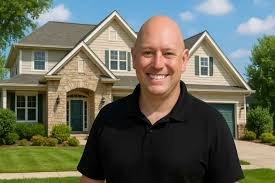
Picture this: you’re a Marine NCO who just got PCS orders to MCB Quantico. You and your family have spent the last two years disciplined saving, and you’ve got your down payment locked and loaded. You find the right home in Aquia Harbour, your offer gets accepted, and then your settlement statement arrives. Suddenly there’s a number on the page that nobody warned you about — and it’s not small.
Or maybe you’re a growing family who finally found the right floor plan in Embrey Mill, you’ve been pre-approved, and you’re three weeks from closing when your loan officer mentions “prepaid escrow items” and “title insurance” for the first time. The excitement hits a wall.
This happens more than it should. Closing costs are real, they’re significant, and they catch buyers off guard every single day — not because they’re hidden, but because nobody took the time to explain them upfront. That changes here.
This guide gives you a plain-English breakdown of how much closing costs are on a mortgage in Stafford County, Virginia, what every line item actually means, and how buyers using VA, FHA, or conventional financing can reduce or structure those costs before they ever get to the settlement table. Duane Buziak (NMLS #1110647), a mortgage broker serving Stafford County families and Quantico-area buyers since 2014, walks through these numbers with every client before a contract is even written. Here’s what that conversation looks like.
The Real Price Tag Beyond Your Down Payment
Your down payment gets all the attention, but closing costs are the second financial commitment every buyer needs to plan for. They are not the same thing, and they don’t come from the same pool of money.
Closing costs are the collection of fees and prepaid items due at settlement. They fall into four broad categories: lender fees (what your broker or lender charges to process and underwrite the loan), third-party service fees (appraisal, title search, title insurance, settlement agent), government recording charges (what Stafford County and the Commonwealth of Virginia charge to record the deed and deed of trust), and prepaid escrow items (your first year of homeowners insurance, prepaid mortgage interest, and the initial deposit into your escrow account for property taxes and insurance).
The general industry framework, cited by both the Consumer Financial Protection Bureau and HUD in their consumer education materials, puts closing costs in the range of 2% to 5% of the loan amount. In Stafford County, where homes in neighborhoods like England Run, Garrisonville, and North Stafford are currently transacting in the $450,000 to $550,000 range, that framework translates to real dollars quickly.
On a $500,000 purchase with a conventional or FHA loan, you’re looking at a closing cost range of roughly $10,000 to $25,000 on top of your down payment. On a $450,000 purchase, that range runs approximately $9,000 to $22,500. These are not fees you can pay with a handshake — they’re due at the settlement table in certified funds or wire transfer.
The good news is that you don’t have to guess. Federal law requires that within three business days of submitting a mortgage application, your lender or broker must deliver a Loan Estimate — a standardized three-page document that discloses every projected closing cost, broken down by category. This is the document Duane walks every Stafford County client through line by line, because understanding it before you’re under contract gives you negotiating power and eliminates the finish-line surprise.
The Loan Estimate also distinguishes between fees you can shop for (like title services) and fees set by the lender. That distinction matters, and it’s where a broker’s ability to work across multiple wholesale lenders creates real value for buyers.
What’s Actually on That Closing Cost Line Sheet
When your Loan Estimate arrives, it will list fees across several sections. Here’s what each category actually contains and why it matters for Stafford County buyers.
Lender-Controlled Fees: These are the fees your broker or lender charges for originating and processing the loan. They typically include an origination fee, an underwriting fee, and potentially discount points if you’re buying down your interest rate. As a mortgage broker, Duane shops these fees across hundreds of wholesale lenders — meaning the origination cost you see is the result of competition, not a take-it-or-leave-it number from a single institution.
Third-Party Fees Standard in Virginia: These are charged by service providers outside the lending relationship, and they’re required by state law or lender guidelines.
Appraisal: An independent valuation of the property, required by virtually every loan type. In Stafford County, appraisal fees typically run in the $500–$700 range for standard single-family homes, though this varies.
Title Search and Title Insurance: Virginia requires a lender’s title insurance policy on every mortgage transaction. Buyers are strongly advised to also purchase an owner’s title insurance policy, which protects your equity against title defects discovered after closing. Stafford Mortgage offers in-house title services, which can simplify coordination and reduce the friction that sometimes comes from working with multiple third-party vendors.
Settlement/Closing Agent Fee: In Virginia, a licensed settlement agent (often an attorney or title company) conducts the closing. Their fee covers the coordination of all documents, disbursement of funds, and recording of the deed.
Credit Report Fee: A standard charge to pull your credit file, typically modest.
Survey: Not always required, but may be needed depending on the property and lender requirements.
Prepaid Items and Escrow Setup: This is the category that surprises buyers most often, because the amounts can be substantial and they feel like “extra” fees — but they’re not fees at all. They’re your own money being collected in advance.
First Year Homeowners Insurance Premium: Your lender requires proof of insurance at closing, and the first year’s premium is typically paid upfront. On a Stafford County home in the $450,000–$550,000 range, annual premiums vary based on coverage, home age, and carrier.
Prepaid Mortgage Interest: Interest accrues from your closing date to the end of that month. If you close on the 10th, you’re prepaying 20 or 21 days of interest. On a $500,000 loan at a 6.5% rate, that’s roughly $89 per day — so closing date timing can meaningfully affect this line item.
Initial Escrow Deposit: Your lender collects two to three months of property taxes and insurance upfront to seed your escrow account. Stafford County real estate taxes are assessed at the county rate — factor this into your cash-to-close planning.
None of these prepaid items are negotiable in amount, but knowing they’re coming means you can budget for them accurately from day one.
VA Loan Closing Costs: What Quantico-Area Buyers Need to Know
For Marines, sailors, and DoD civilians PCS-ing to or commuting from MCB Quantico, the VA loan is often the most powerful financing tool available. But “no down payment” doesn’t mean “no closing costs” — it means the cost structure is different, and in many cases more favorable.
The VA Funding Fee: This is a one-time fee paid to the Department of Veterans Affairs — not to the lender. It exists to sustain the VA loan program for future generations of veterans. According to the VA.gov official funding fee schedule, the fee varies based on down payment amount and whether it’s a first or subsequent use of the benefit:
First-time use, zero down: 2.15% of the loan amount.
Subsequent use, zero down: 3.3% of the loan amount.
First-time use, 5% or more down: 1.5% of the loan amount.
First-time use, 10% or more down: 1.25% of the loan amount.
Veterans with a VA-rated service-connected disability are exempt from the funding fee entirely. If you’re not sure of your rating status, Duane can help you confirm exemption eligibility before closing. The funding fee can be financed into the loan amount, meaning it does not have to come out of pocket at closing.
VA Non-Allowable Fees: The VA restricts certain fees that lenders can charge VA borrowers, as outlined in the VA Lenders Handbook. This means some costs that conventional borrowers pay routinely cannot be passed to a VA buyer. Additionally, sellers can contribute up to 4% of the purchase price in concessions toward the buyer’s closing costs and other fees — a meaningful advantage in Stafford County’s market where negotiation is part of every transaction.
Worked Example — Segment A: $500,000 Purchase in Aquia Harbour, VA Loan, Zero Down, First-Time VA Use
Purchase Price: $500,000
Down Payment: $0
VA Funding Fee (2.15%, financed): $10,750 — added to the loan balance, not paid at closing
Loan Amount After Funding Fee: $510,750
Estimated Third-Party and Lender Closing Costs: $8,000–$12,000 (appraisal, title, settlement, prepaid interest, escrow setup, origination)
Seller Concessions (4% of $500,000 = $20,000 maximum): Negotiated seller contribution of $10,000 toward closing costs
Estimated Out-of-Pocket at Closing: $0–$2,000 depending on final cost negotiation and lender credit structure
One more advantage for Quantico-area buyers mid-PCS: the VA Certificate of Eligibility (COE) can be pulled electronically by Duane directly through the VA’s WebLGY system using your Social Security number and date of birth. No paper DD-214 required in most cases. If you’re in transit and don’t have documents in hand, that’s not a barrier to moving forward.
For buyers purchasing above the standard entitlement baseline in Stafford County, second-tier (bonus) entitlement applies and allows zero-down financing above the base guarantee amount. Duane calculates this routinely for Quantico-area buyers — it’s a conversation worth having before you assume a down payment is required.
FHA and Conventional Closing Costs: A Stafford Buyer’s Comparison
Not every Stafford County buyer has VA eligibility, and not every purchase situation calls for it. Here’s how closing costs break down for FHA and conventional buyers, with worked examples anchored to Stafford price points.
FHA Closing Costs — Segment B: FHA loans are a common path for first-time buyers in communities like Garrisonville and Rockhill because they require only 3.5% down with qualifying credit. The key upfront cost is the Upfront Mortgage Insurance Premium (UFMIP) of 1.75% of the base loan amount, per HUD/FHA guidelines. Like the VA funding fee, UFMIP is financed into the loan.
Worked Example — Segment B: $420,000 Purchase in Garrisonville, FHA Loan, 3.5% Down
Purchase Price: $420,000
Down Payment (3.5%): $14,700
Base Loan Amount: $405,300
UFMIP (1.75%, financed): $7,092.75 — added to loan balance
Total Loan Amount: $412,392.75
Estimated Third-Party and Lender Closing Costs: $7,500–$10,500 (appraisal, title, settlement, prepaid items, escrow setup)
FHA Seller Concession Limit: Up to 6% of purchase price ($25,200 maximum) — meaningful room to negotiate
Estimated Cash to Close (after $8,000 seller concession): Approximately $14,700 down payment plus any remaining closing costs not covered by concessions
Conventional Closing Costs — Segment B: Conventional loans carry no UFMIP, but if your down payment is under 20%, private mortgage insurance (PMI) applies as a monthly cost rather than an upfront premium. Conventional loans offer more flexibility on seller concession limits depending on your loan-to-value ratio. For refinance scenarios, note that conventional cash-out is capped at 90% LTV.
Here’s the side-by-side view every Stafford County buyer should see before choosing a loan type:
| Loan Type | Upfront MIP / Funding Fee | Seller Concession Limit | Typical Out-of-Pocket Closing Costs | No-Out-of-Pocket Closing Options Available |
|---|---|---|---|---|
| VA | 2.15%–3.3% (financed; exempt if service-connected disability) | Up to 4% of purchase price | $0–$5,000 with concessions and lender credits | Yes — seller concessions + lender credits can cover most or all costs |
| FHA | 1.75% UFMIP (financed) | Up to 6% of purchase price | $5,000–$12,000 depending on price point and negotiation | Yes — seller concessions can cover closing costs; down payment still required |
| Conventional | None | 3%–9% depending on LTV (per Fannie Mae/Freddie Mac guidelines) | $8,000–$20,000 depending on loan amount and structure | Yes — lender credits and seller concessions available; terms vary by LTV |
Strategies to Reduce What You Bring to the Table
Knowing how much closing costs are on a mortgage is only half the equation. The other half is knowing which tools are available to reduce what you actually have to bring to the settlement table. There are legitimate, lender-approved strategies that Stafford County buyers use regularly.
Seller Concessions: In Stafford County’s market, negotiating seller-paid closing costs is a standard part of the offer process — not an unusual ask. Whether you’re looking at resale homes in Embrey Mill or new construction in Rockhill, sellers often have flexibility, especially when a buyer’s offer is otherwise strong. The key is knowing the concession limits by loan type (see the comparison table above) and structuring your offer so the concession request doesn’t undermine your purchase price competitiveness. Duane helps buyers frame this negotiation correctly from the start.
Lender Credits in Exchange for a Slightly Higher Rate: This is a trade-off that makes sense for some buyers and not others. A lender credit means the lender covers a portion of your closing costs in exchange for a slightly higher interest rate on your loan. If you plan to sell or refinance within three to five years, the monthly cost of the higher rate may be less than what you’d spend bringing more cash to closing today. If you’re planning to stay in your Stafford County home for the long term, the math often favors the lower rate. Duane can model both scenarios with real numbers so you can make the decision that fits your timeline.
No-Out-of-Pocket Closing Options: Rolling closing costs into the loan, using lender credits, and negotiating seller concessions are all legitimate structuring tools. When combined strategically, they can result in a closing where your out-of-pocket costs are minimal. This is often referred to as a “no-out-of-pocket closing” option — and it’s worth noting that this is different from “zero closing costs.” The costs still exist; they’re simply structured so you’re not writing a large check at the settlement table.
One important note for Stafford County buyers exploring assistance programs: Virginia does not currently offer a statewide down payment assistance program that can be layered on top of other assistance in a way that eliminates all costs. Structure your expectations around the tools above rather than assuming grants can be stacked to cover everything.
The right combination of these strategies depends on your loan type, your timeline, and your cash position. That’s exactly the kind of analysis Duane provides before you’re ever under contract.
8 Questions Stafford Buyers Ask About Closing Costs
1. Can closing costs be rolled into the loan?
In some cases, yes. VA buyers can finance the funding fee directly into the loan amount. For other closing costs, rolling them in typically requires a refinance structure or a lender credit arrangement. On a purchase transaction, most closing costs must be paid at settlement — either by you, the seller, or through lender credits. Duane walks every Stafford County buyer through which costs can be structured and which cannot.
2. Who pays closing costs in Virginia — buyer or seller?
In Virginia, both parties can pay closing costs, and the allocation is negotiated as part of the purchase contract. Buyers typically pay lender fees, appraisal, and prepaid items. Sellers can contribute toward the buyer’s closing costs up to the limits set by the loan type — up to 4% for VA loans, up to 6% for FHA, and 3%–9% for conventional depending on the down payment. In Stafford County’s market, seller concessions are a common and accepted negotiating tool.
3. What is a no-out-of-pocket closing option?
A no-out-of-pocket closing option means structuring your loan and purchase contract so that your closing costs are covered by a combination of seller concessions and lender credits, rather than paid directly from your cash reserves at closing. The costs still exist — they’re either absorbed by the seller, offset by a slightly higher interest rate through lender credits, or financed where permitted. This is a legitimate and commonly used strategy for Stafford County buyers who want to preserve cash after closing.
4. Do VA loans have closing costs?
Yes. VA loans have closing costs, but the structure is different from conventional and FHA loans. The VA funding fee (which can be financed into the loan) replaces mortgage insurance, and the VA restricts certain fees lenders can charge VA borrowers. Sellers can contribute up to 4% of the purchase price in concessions. For Quantico-area buyers using VA financing on a $500,000 home in Stafford County, out-of-pocket closing costs can often be reduced significantly through concession negotiation and lender credits.
5. How much should I budget for closing costs in Stafford County?
For a home in Stafford County’s current price range of $450,000–$550,000, budget 2%–5% of the loan amount for closing costs as a planning baseline. On a $500,000 purchase, that’s roughly $10,000–$25,000 before concessions and credits. Your actual number will depend on your loan type, your closing date, your property tax proration, and how your contract is structured. A Loan Estimate from Duane will give you the real number specific to your transaction.
6. What is a Loan Estimate and when do I get one?
A Loan Estimate is a standardized three-page disclosure document required by federal law. Your lender or broker must deliver it within three business days of receiving your mortgage application. It itemizes all projected closing costs, your estimated interest rate, monthly payment, and loan terms. It is the most important document in the early stages of your mortgage process — and Duane reviews it line by line with every Stafford County client so there are no surprises at closing.
7. Can I negotiate closing costs with my lender?
Yes, on lender-controlled fees. Origination fees and underwriting fees are negotiable, and working with a broker like Duane means those fees are already being competed across multiple wholesale lenders on your behalf. Third-party fees (appraisal, title, settlement) are set by independent providers, though you have the right to shop for title services. Government recording fees and prepaid items are not negotiable in amount.
8. What happens if I don’t have enough cash to cover closing costs?
You have options. Seller concessions can cover a significant portion of closing costs if negotiated into the contract. Lender credits can offset costs in exchange for a slightly higher rate. For VA buyers, the funding fee can be financed. If you’re a Stafford County buyer who is short on cash to close, the right conversation to have is with Duane before you’re under contract — not after — so the offer can be structured to address the gap from the start.
Your Next Steps — No Surprises at the Settlement Table
Closing costs are not a mystery, and they don’t have to be a last-minute shock. When you understand what they are, what drives them, and how to structure your transaction to manage them, they become just another part of the plan — not a barrier to homeownership.
Duane Buziak has been helping Stafford County families, veterans, and Quantico-area buyers structure their loans since 2014. Whether you’re a Marine NCO navigating a PCS move to Aquia Harbour, a first-time buyer eyeing a home in Garrisonville, or a growing family ready to put down roots in Embrey Mill, the conversation starts with real numbers — your numbers — before you’re ever under contract.
A Loan Estimate review costs you nothing and tells you everything. You’ll know exactly what you’re looking at for closing costs, how your loan type affects the structure, and what strategies are available to reduce what you bring to the table.
Connect with Duane Buziak today to request your Loan Estimate review, or call directly at 540-870-5594. Your closing cost picture should be clear long before closing day.