
Financing a manufactured home in Stafford County works differently from financing a site-built house, and the lender you choose matters more than most buyers expect. Many manufactured home mortgage lenders decline these properties outright, and others accept them only under overlays that cut out older homes, single-wides, or homes on leased land. The result is that buyers lose weeks on an application that was never going to clear.
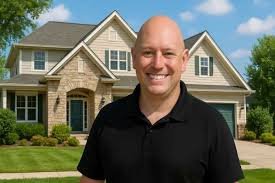
Duane Buziak, a mortgage broker helping families find their new homes since 2014, sees the same pattern across North Stafford, Garrisonville, Rockhill, and the communities that feed commuters to MCB Quantico: the property decides the options, then the program, then the provider. These seven strategies follow that order. Program rules, fees, and limits change, so figures below are marked “as of 2026” and should be confirmed before you act on them.
1. Confirm Your Home Qualifies as Real Property
Start with definitions, because they decide everything. A manufactured home is built in a factory to the federal HUD Code, which applies to homes built on or after June 15, 1976. A modular home is also factory-built but follows state and local building codes, and it is generally financed like a site-built house. A chattel loan is a personal-property loan secured by the home alone, usually with a higher rate and shorter term than a mortgage. To get a true mortgage, the home generally must be permanently affixed to land you own and titled as real property.
Here is an illustration. A buyer eyes a manufactured home on an owned acre in north Stafford. Before making an offer, they ask for the title history and learn the home was never converted from a vehicle-style title to real property. They fix that first, and the deal does not collapse at underwriting.
- Find the HUD data plate inside the home (often in a kitchen cabinet or closet) and the red HUD certification label on the exterior of each section.
- Order an engineer’s foundation certification showing the foundation meets the HUD manufactured housing standards used for FHA financing.
- Confirm title status with the seller and a title company, including whether the home is retired from the DMV title system and recorded with the land.
- Send all documents to Duane Buziak before you spend money on an appraisal.
Common mistake: making an offer and ordering an appraisal first. Missing labels and uncertified foundations are expensive to discover late. Duane Buziak also notes that “older homes always qualify” is a myth: a home built before June 15, 1976 has no HUD label and is generally ineligible for these programs.
What to measure: the share of eligibility items cleared before application, and whether the appraisal and underwriting stages produce no surprises.
2. Match the Loan Program to Your Situation
Conventional, FHA, and VA each treat manufactured homes differently, and none simply mirrors its site-built rules. Fannie Mae’s guidelines cover manufactured housing under conditions on size, width, and foundation. FHA follows HUD Handbook 4000.1, which requires the HUD label and an engineer-certified permanent foundation. VA publishes its own property standards through its home loan program. The table summarizes the general picture as of 2026; confirm current guidelines for your specific home.
| Loan Program | Min Down Payment | Mortgage Insurance/Funding Fee | Key Property Requirements | Best Fit Segment |
|---|---|---|---|---|
| Conventional (Fannie Mae guidelines) | Often around 5% for a primary residence; confirm per home | Private mortgage insurance typically applies under 20% down | HUD label, real property, permanent foundation, size and width minimums | Buyers with stronger credit and savings (general buyers) |
| FHA | 3.5% with a qualifying credit score, as of 2026 | Upfront and annual mortgage insurance premiums | Built after June 15, 1976, HUD label, engineer-certified foundation, real property | First-time and moderate-credit buyers (general buyers) |
| VA | 0% for eligible borrowers with full entitlement | VA funding fee unless exempt; no monthly mortgage insurance | Permanently affixed, real property, HUD label, VA property standards | Veterans, active-duty service members, Quantico commuters |
Now an illustration, labeled as such: a Marine stationed at MCB Quantico with full entitlement compares VA against FHA for a qualifying multi-section home. With no down payment and no monthly mortgage insurance, VA may look stronger on cash to close, but only if the home clears VA’s property standards.
On entitlement, VA’s second-tier calculation works like this. Take the county loan limit, multiply by 25% for the guarantee, subtract entitlement already used, then multiply by 4. Suppose, for illustration only, a limit of $1,000,000: 25% is $250,000; minus $50,000 used leaves $200,000; times 4 gives $800,000 of no-down-payment loan size. Check the VA loan limits page for the actual Stafford figure. Most manufactured home prices sit far below any such ceiling.
Common mistake: assuming VA or FHA rules match those for site-built homes. What to measure: estimated monthly payment and cash to close across programs, and how many programs the property clears. For VA, Duane Buziak can pull the Certificate of Eligibility electronically with your SSN and date of birth.
3. Work With a Broker Who Can Compare Options
Not all manufactured home mortgage lenders apply the same rules. The program guidelines set a floor, but each investor adds overlays: a cap on home age, a requirement for a double-wide, a minimum square footage, a stricter appraisal approach. Duane Buziak is a broker with access to hundreds of wholesale lenders, which means one property can be shown to several sets of rules instead of one.
An illustration: one investor declines a 1998 single-wide because of its age, while another accepts it with a clean foundation certification and an appraiser who has manufactured home comparables. The buyer never needs to know about the first decline if the file goes to the second investor first.
Putting it into practice is a short sequence:
- Share the year built, section count, square footage, land ownership, and foundation documents at the first conversation.
- Ask each provider directly about overlays, appraisal requirements, and typical timelines for manufactured homes.
- Compare written Loan Estimates side by side, looking at rate, fees, and mortgage insurance together.
Common mistake: applying with a provider that never clearly says whether it finances manufactured homes. A friendly yes at the front desk can turn into a decline at underwriting three weeks later, after you have paid for an appraisal and let a rate lock tick down.
What to measure: the time from application to written approval, and the number of providers that confirm in writing that the property is eligible. If no one will confirm eligibility, treat that as information about the property, and go back to Strategy 1.
4. Budget for the Real Cost
A manufactured home payment is more than principal and interest. Down payment, upfront mortgage insurance or funding fee, engineer certification, title charges, property taxes, and homeowners insurance all belong in the budget. The following is a worked illustration, not a market statistic: the price is a round number chosen for arithmetic, not a verified Stafford median.
Suppose a $325,000 purchase of a manufactured home on owned land in Stafford, financed with FHA.
- Down payment at 3.5%: $11,375, leaving a base loan of $313,625.
- Upfront mortgage insurance at 1.75%: $5,488, financed, for a total loan of about $319,113.
- Principal and interest at an assumed 6.5% fixed rate over 30 years: about $2,017 per month.
- Annual mortgage insurance at an assumed 0.55%: about $144 per month.
- Property taxes at an assumed 0.95% of price: about $257 per month.
- Homeowners insurance, assumed: $150 per month.
- Total: about $2,568 per month. At a gross monthly income of $7,500, that is roughly 34%.
Rate assumptions: the 6.5% rate, 0.55% annual premium, tax rate, and insurance figure are examples only, not quotes or an APR. Actual terms depend on credit, program, and market conditions on the day you lock.
Cash at closing in this example: $11,375 down, an assumed $600 engineer certification, and an assumed $9,000 in title and lender charges, for about $20,975. Seller credits or no-out-of-pocket closing options may reduce this, depending on the contract and program. Confirm the real tax rate with Stafford County and get an actual insurance quote.
Common mistake: budgeting only for principal and interest. What to measure: total housing payment as a percentage of gross income, and the cash needed at closing.
5. Understand Land, Lot Rent, and Zoning
Whether you own the land often decides whether you get a mortgage at all. A home on a leased lot, such as in a rented-pad community, usually cannot be recorded as real property with you owning both, so financing tends to move toward a chattel loan. Owned land lets the home and parcel be pledged together.
An illustration: a buyer compares a rural parcel near Rockhill with a leased lot. The owned parcel supports a mortgage; the lease pushes toward a personal-property loan with a higher rate. The buyer may still choose the lease for other reasons, but now knows the financing cost of that choice.
Land has a second gate, which is whether the use is permitted. Zoning districts differ on manufactured homes, and some HOA covenants restrict them or set standards for siting, skirting, or roof pitch. Rules vary community by community, so ask for the covenants of any specific neighborhood rather than assuming.
- Confirm zoning for the exact parcel with Stafford County Planning and Zoning through the county website.
- Request HOA covenants and any architectural guidelines in writing where an association exists.
- Confirm land ownership terms, including any lease length, easements, and well and septic status.
- Do all of this before your contract’s due diligence deadline.
Common mistake: assuming a parcel allows a manufactured home because one sits on the neighboring lot. Older homes can be grandfathered under rules that no longer apply to a new placement.
What to measure: written confirmation of zoning and covenant compliance in hand before the due diligence deadline.
6. Strengthen Credit and Documentation
Credit tiers drive pricing, and manufactured home files often get a closer look from underwriters because the collateral is harder to value. Preparation is cheap compared with a wrong tier. Illustration, hypothetical: a DoD commuter with high card balances pays them down before applying, moves into a stronger rate tier, and lowers both the rate and the monthly mortgage insurance cost.
The preparation steps:
- Pull your free reports at AnnualCreditReport.com and dispute errors in writing.
- Keep card balances low and payments on time for the months before applying.
- Gather the paperwork: recent Leave and Earnings Statements and orders for service members, two years of tax returns for self-employed borrowers, and recent bank statements for everyone.
- Document large deposits so underwriters do not have to ask.
Military income has quirks worth raising early, such as housing allowances, a pending PCS move, or income from a spouse who may change jobs. Self-employed borrowers, including contractors who work near the base, should expect the tax returns to carry most of the weight. Credit restoration is also available through Duane Buziak’s services if the scores need work before you apply.
Common mistake: opening new credit or making large purchases mid-process. A furniture financing offer for the new home can undo an approval. Hold off on any new debt until after closing.
What to measure: credit score movement and debt-to-income ratio before and after preparation.
7. Plan a Refinance or Upgrade Path
If you already own a manufactured home with a personal-property loan, there may be a way to a mortgage. Once the home sits on a certified permanent foundation and the title is converted to real property on land you own, the loan can sometimes be refinanced into a mortgage with a lower rate and longer term. That is the mechanism: the collateral has changed, so the product can change.
An illustration: an owner with a personal-property loan on a home in Garrisonville completes the foundation certification, converts the title, and explores a refinance into a mortgage. The savings depend on the old rate, the new rate, and the costs of getting there.
- Confirm foundation certification and title conversion first, as in Strategy 1.
- Order an appraisal that reflects the home as real property.
- Compare rate and term options, including shorter terms with higher payments.
- Coordinate title work and a homeowners insurance policy that matches the new loan.
Common mistake: refinancing without comparing closing costs to savings. If the new loan saves $120 per month and costs $6,000 to close, the break-even is 50 months. Selling or moving before then loses money.
What to measure: break-even months on closing costs, and the change in monthly payment. Veteran owners should also ask how a VA refinance would treat their entitlement.
Manufactured Home Financing Questions Stafford Buyers Ask
Can you get a mortgage for a manufactured home in Stafford County?
Yes, if the home meets program rules: HUD label, permanent foundation, and real-property title on land you own. Homes that do not qualify may still be financed with a personal-property (chattel) loan.
What is the difference between manufactured and modular homes?
Manufactured homes are built to the federal HUD Code and carry HUD labels. Modular homes are built to state and local building codes and are generally financed like site-built houses.
What is a chattel loan?
A chattel loan finances the home as personal property rather than real estate. It often carries a higher rate and shorter term than a mortgage.
Is a foundation certification required?
For FHA, yes: an engineer must certify the foundation meets HUD standards. Other programs have their own foundation requirements, so confirm with Duane Buziak early.
Can I use a VA loan to buy a manufactured home?
Yes, if the home is permanently affixed, titled as real property, and meets VA property standards. Eligible borrowers with full entitlement may not need a down payment. See the VA home loan program for current details.
How much down payment does an FHA manufactured home loan need?
As of 2026, FHA generally allows 3.5% down for borrowers with a qualifying credit score, subject to the property meeting HUD requirements.
Do older manufactured homes qualify?
Not automatically. The home must have been built after June 15, 1976, and each investor may set its own age limits on top of that.
Why use a broker for a manufactured home loan?
A broker can compare investors with different manufactured home overlays. Duane Buziak is a broker, not a direct lender, so one property can be matched with the rules that fit it.
Where to Begin and Who to Call
Start with Strategy 1, because real-property status decides which loans are even possible. Use Strategies 2 and 3 next to pick the program and the broker, then work through budget, land, credit, and refinance planning in whatever order your timeline demands. If a home fails the first test, it is better to learn that before the appraisal fee than after.
Your dream home in Stafford County is closer than you think, with personalized mortgage solutions and local expertise that puts your family’s needs first. Connect with Duane Buziak today to explore flexible home loan options, discover competitive rates, and get the trusted guidance that’s earned recognition as one of Virginia’s top mortgage professionals. Call Stafford Mortgage by Duane Buziak at 540-870-5594.