
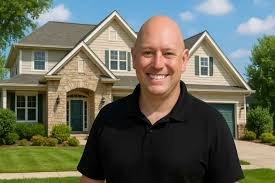
If you’ve been quietly assuming that Stafford County is “too suburban” or “too close to D.C.” to qualify for a USDA loan, you’re not alone — and you may be leaving a no-down-payment mortgage option on the table. That assumption catches a lot of Stafford buyers off guard, and it’s one of the first things Duane Buziak addresses when a new client walks through the door.
Here’s the reality: Stafford County is geographically large, and it contains a genuine mix of suburban and rural land. Areas like Rockhill, portions of North Stafford away from the I-95 spine, and the Stafford Courthouse corridor don’t look like “rural Virginia” on a mental map — but the USDA’s eligibility designation is based on population data and census classifications, not on how close a neighborhood feels to the D.C. metro. Some Stafford addresses fall inside USDA-eligible rural zones. Others don’t. The only way to know is to check the actual address.
That distinction matters enormously for Stafford County buyers who aren’t VA-eligible and are comparing their options. USDA loans offer something rare in today’s market: zero down payment on a government-backed mortgage. For non-military buyers who don’t have a 3.5% FHA down payment saved, or who simply want to preserve their savings after closing, USDA can be a genuine path to homeownership — if they qualify.
Duane Buziak (NMLS #1110647) has been helping Stafford County families find their homes since 2014. As a mortgage broker, not a lender or banker, Duane shops across multiple wholesale lenders to match each borrower with the right program and pricing. This article is his plain-language breakdown of USDA loan eligibility in Virginia, structured around the three pillars every buyer needs to understand: property location, household income, and individual borrower qualifications. All three must be satisfied. Think of them as gates, not checkboxes — you have to pass through every one.
Segment: B — general buyers in Stafford County considering USDA as an alternative to FHA or conventional financing. Civilian DoD employees and contractors near MCB Quantico who are not VA-eligible may also find this path relevant.
The Three Eligibility Gates Every Virginia USDA Buyer Must Pass
USDA loan eligibility isn’t a scoring system where strong performance in one area compensates for weakness in another. It’s a series of gates — and all three must open before a loan can move forward. Understanding this structure upfront saves buyers from investing time in a program that won’t work for their specific situation.
Gate One: Property Location. The home must be located in a USDA-designated rural area as defined by the agency’s eligibility map. This isn’t a judgment call — it’s a map-based determination tied to census population data. Urban and suburban areas with higher population densities are typically excluded. Some Stafford County addresses qualify; many don’t. The only authoritative answer is an address-level check at the USDA Rural Development Eligibility Site.
Gate Two: Household Income. USDA counts the income of all persons living in the household, not just the borrowers listed on the loan. This is the element that surprises most Stafford buyers. A couple who would easily qualify on their own income may push over the limit once a working adult child or a second earner in the home is factored in. Income limits vary by county and household size, and Stafford County’s limits reflect a Northern Virginia cost-of-living adjustment — but they are still capped.
Gate Three: Borrower Qualifications. Individual borrowers must meet credit, debt-to-income, citizenship or eligible residency status, and primary residence requirements. These are the criteria most buyers think of first, but they’re actually the third gate — not the first.
One more structural point worth understanding before going further: USDA operates two residential loan programs. The Section 502 Guaranteed Loan is the one Duane originates through his broker channel. It’s available through approved private lenders and brokers, and it’s the program this article focuses on. The Section 502 Direct Loan is administered directly by USDA for very low-income borrowers and is not a product Duane originates. If you believe you may qualify for the Direct Loan program, visit USDA Rural Development’s Virginia State Office directly for guidance.
On the cost side, USDA loans carry no private mortgage insurance (PMI). Instead, they use an upfront guarantee fee (financed into the loan) and an annual fee. For most borrowers, this fee structure is lower than FHA’s mortgage insurance premium (MIP) structure on a comparable loan size — which can translate to a meaningfully lower monthly payment over time. We’ll compare the two programs in detail later in this article.
Does Your Stafford County Address Qualify? How to Use the USDA Property Map
The USDA property eligibility map is publicly available and free to use. The tool lives at eligibility.sc.egov.usda.gov, and it accepts a specific street address as input. That last part is critical: you must enter the actual property address, not a zip code, city name, or neighborhood name. The eligibility boundary can cut through a subdivision, meaning one street qualifies and the next one doesn’t.
Here’s how to use it correctly. Navigate to the site, select “Single Family Housing Guaranteed” under the property eligibility section, enter the full street address of the property you’re considering, and read the result. The map will return either an eligible or ineligible designation for that specific address. Screenshot the result and note the date — you’ll want a record of what the map showed at the time you checked.
Now for the Stafford-specific geography. Stafford County stretches across a large footprint that includes everything from dense commercial corridors along I-95 to quieter, lower-density areas further from the highway. As a general pattern — and this is a pattern, not a guarantee — areas closer to the I-95 spine and the commercial strips near Garrisonville Road and Route 610 tend to fall outside USDA eligible zones because of their population density. More rural pockets, including areas toward Rockhill, portions of North Stafford away from the interstate, and the Stafford Courthouse area, may carry eligibility. The word “may” is doing real work in that sentence.
Do not assume eligibility based on how rural an area looks or feels. Do not rely on a neighbor’s experience from a prior year. The USDA eligibility map is updated periodically as census and population data changes. An area that was eligible when your neighbor bought three years ago may have lost that designation after a map revision. An area that appears ineligible today may regain eligibility in a future update. The only authoritative answer is a current address-level check at the time of your application.
This is one of the practical reasons working with an experienced broker matters. Duane runs the address check early in the conversation — before a buyer invests time in a full application — so there are no surprises at the underwriting stage. If the address doesn’t qualify for USDA, Duane pivots immediately to FHA, conventional, or whatever program fits the buyer’s profile. No wasted time, no false starts.
One more note: if you’re searching online and find screenshots or cached maps from prior years showing a Stafford address as eligible, treat those as starting points for your own research, not as authoritative answers. Always verify current status directly at the USDA eligibility site.
Virginia USDA Income Limits: Why Your Whole Household’s Income Is on the Table
Of the three eligibility gates, the household income requirement is the one that catches the most Stafford buyers off guard. Most people assume that a mortgage income review looks at the borrowers on the loan. USDA works differently: it counts the gross annual income of all persons who will be living in the household, whether or not they are on the loan application.
Picture a two-income couple in their late thirties buying a home in a USDA-eligible pocket of North Stafford. On their own, their combined income falls comfortably under the limit. But their 22-year-old is moving in with them after college and has a full-time job. That adult child’s income gets added to the household total. Suddenly the household is over the limit, and USDA is off the table — even though the loan applicants themselves would have qualified. This scenario plays out regularly, and it’s one of the first things Duane asks about when a buyer expresses interest in USDA.
To find current Virginia income limits by county and household size, use the income eligibility tool at eligibility.sc.egov.usda.gov. Stafford County falls under a Northern Virginia cost-of-living adjustment, which means its income limits are higher than those applied to more rural Virginia counties. That’s genuinely good news for Stafford buyers — the limits are more permissive than many people expect. But they are still capped, and the limits adjust annually. This article does not state specific dollar figures because those figures are updated each year; always check the current 2026 figures directly through the USDA tool.
Here’s where many buyers who initially appear over-income find their way back into eligibility: USDA permits specific income deductions that reduce the household income figure used for the limit calculation. These include:
Dependent deductions: A set annual deduction applies for each dependent living in the household, including children and other qualifying dependents.
Childcare expenses: Documented, necessary childcare costs for children 12 and under can be deducted from household income.
Disability expenses: Expenses related to the care of a disabled household member may qualify for deduction.
Elderly household member deduction: Households with a member aged 62 or older receive an additional deduction.
The practical implication: a household that appears over the USDA income limit on paper may qualify after allowable deductions are applied. This is not a loophole — it’s built into the USDA program design. But calculating it correctly requires knowing which deductions apply, how to document them, and how to present the adjusted income figure to the lender. An experienced broker who has run these calculations before makes a real difference here. For general borrower education on USDA income rules, the Consumer Financial Protection Bureau offers a helpful overview of how USDA loans work.
Borrower Qualification Standards: Credit, DTI, and What USDA Actually Looks For
Once property location and household income are confirmed, the third gate is individual borrower qualification. This is where credit scores, debt ratios, and personal eligibility requirements come into play.
Credit Score Requirements. For USDA Guaranteed Loans processed through the agency’s Guaranteed Underwriting System (GUS), a minimum 640 FICO score is the standard threshold for automated approval. Borrowers below 640 are not automatically disqualified, but their files require manual underwriting — a more intensive review process that demands stronger compensating factors such as significant cash reserves, a long history of stable employment, or a low debt-to-income ratio. Bankruptcies discharged within the past three years and foreclosures within the past three years are disqualifying factors. If your credit score isn’t at 640 yet, Duane can connect you with credit restoration resources and help you build a plan to get there.
Debt-to-Income Ratios. USDA general guidelines target a housing ratio (principal, interest, taxes, and insurance as a percentage of gross monthly income) of no more than 29%, and a total debt-to-income ratio of no more than 41%. Automated underwriting can approve ratios above these thresholds when compensating factors are present — stable long-term employment, excellent credit history, or significant reserves, for example.
To make this concrete, here’s a fully illustrative example using a representative Stafford County entry-level price point. These numbers are for illustration only and do not represent a rate quote, loan approval, or official figures.
Assume a home priced at $380,000 in a USDA-eligible Stafford County location. Because the USDA upfront guarantee fee is financed into the loan rather than paid at closing, the actual loan amount will be slightly above the purchase price. Using a hypothetical loan amount of approximately $383,800 (reflecting a financed guarantee fee), and assuming a hypothetical interest rate for illustration purposes, a buyer would need to confirm that their estimated monthly principal and interest payment, plus property taxes, homeowners insurance, and the annual USDA fee, fits within the 29% housing ratio threshold. At a gross monthly income of approximately $7,500, a buyer would need to keep total housing costs at or below roughly $2,175 per month to stay within the 29% guideline. Whether the payment on a $383,800 loan achieves that depends on the actual interest rate at time of application — which Duane can run in a real scenario for your specific profile.
Other Borrower Requirements. USDA loans require U.S. citizenship or eligible non-citizen status. The property must be the borrower’s primary residence — USDA cannot be used for investment properties, vacation homes, or income-producing properties. This is worth flagging for any Stafford buyer considering a home that includes a rental unit: USDA is not the right program for that scenario, regardless of how the buyer intends to use the property.
USDA vs. FHA in Stafford County: Choosing the Right Path
For Stafford County buyers who don’t have a large down payment saved, USDA and FHA are often the two programs on the table. Here’s a direct comparison across the dimensions that matter most.
| Feature | USDA Guaranteed Loan | FHA Loan |
|---|---|---|
| Down Payment | Zero down payment required | 3.5% minimum (with 580+ FICO) |
| Mortgage Insurance Type | Upfront guarantee fee + annual fee (no PMI) | Upfront MIP + annual MIP |
| Property Location Restriction | Must be in USDA-designated rural area | No geographic restriction |
| Household Income Limit | Yes — all household members counted | No household income limit |
| Minimum Credit Score (Automated) | 640 FICO for GUS approval | 580 FICO for 3.5% down; 500 with 10% down |
| Primary Residence Requirement | Yes — primary residence only | Yes — primary residence only |
When USDA is the stronger fit. If the property address falls within a USDA-eligible zone, household income is under the limit after deductions, and the buyer has a 640+ FICO, USDA typically delivers a lower monthly payment than FHA on a comparable loan size. The annual USDA fee is generally lower than FHA’s annual MIP, which compounds into meaningful savings over a 30-year loan term. And zero down payment versus FHA’s 3.5% minimum means less cash out of pocket at closing.
When FHA may be the better fit. If the property is in a denser Stafford neighborhood near the Garrisonville Road commercial corridor, the address is likely ineligible for USDA — and FHA has no geographic restriction. FHA is also more accessible for buyers with credit scores between 580 and 639 who don’t yet meet the USDA automated underwriting threshold. And if the household income exceeds USDA limits, FHA has no equivalent cap.
One important note: for Stafford County veterans and active-duty service members, the VA loan remains the strongest available program when eligibility exists. VA offers zero down payment with no ongoing mortgage insurance and strong borrower protections. USDA and VA serve different eligibility populations — USDA is not a VA alternative, and the two programs should not be conflated. Civilian DoD employees and contractors near MCB Quantico who are not VA-eligible, however, may find USDA particularly relevant if they’re purchasing in a rural-designated Stafford pocket.
How Duane Buziak Guides Stafford County Buyers Through the USDA Process
USDA loans are not complicated — but they have more moving parts than a conventional loan, and the lender you choose matters more than most buyers realize. This is where Duane’s broker model creates a genuine advantage.
As a mortgage broker, not a lender or banker, Duane is not limited to one institution’s product set. He shops across multiple wholesale lenders to find the USDA-approved lender with the most competitive pricing and the most accommodating underwriting for a given borrower profile. This is especially significant for USDA because of lender overlays. Overlays are additional requirements that individual lenders layer on top of USDA’s published guidelines — for example, a lender might require a 660 credit score even though USDA’s minimum for automated underwriting is 640, or might apply stricter DTI limits than USDA guidelines allow. A borrower who is declined at one lender due to overlays may be fully approvable at another. A broker who can access multiple wholesale lenders can find the right fit rather than sending a borderline borrower away empty-handed.
From a Stafford buyer’s perspective, here is what the USDA process typically looks like when working with Duane. The conversation starts with a pre-qualification discussion covering income, credit, and the property address. Duane runs the address eligibility check and the household income check early, before any paperwork is submitted. If USDA is viable, the full application follows. From there, the file goes through standard lender underwriting and then to USDA for a Conditional Commitment — the agency’s own approval step. That agency review adds time to the process compared to conventional or FHA loans. USDA loans typically take longer to close, and buyers should plan their purchase timelines accordingly. Sellers in competitive Stafford County markets should be made aware of this timeline during offer negotiations.
If you’re a Stafford County buyer curious about whether USDA is a realistic path for your address and household, the most efficient next step is a direct conversation. Duane Buziak can be reached at 540-870-5594 for a no-pressure eligibility conversation. He’ll tell you quickly whether USDA, FHA, or another program is the right fit — and if USDA isn’t viable for your situation, you’ll know that before you’ve wasted any time chasing the wrong program.
Frequently Asked Questions: USDA Loan Eligibility in Virginia
1. Does Stafford County, Virginia qualify for USDA loans?
Parts of Stafford County may fall within USDA-eligible rural zones, but eligibility is determined at the individual property address level — not by county, zip code, or neighborhood name. Buyers must verify the specific address using the USDA eligibility map at eligibility.sc.egov.usda.gov. Denser corridors near I-95 and Garrisonville Road are more likely to be ineligible; more rural pockets toward Rockhill and Stafford Courthouse may qualify. Only an address-level check provides a definitive answer.
2. What is the income limit for a USDA loan in Virginia?
USDA income limits vary by county and household size, and they are updated annually. Stafford County falls under a Northern Virginia cost-of-living adjustment, which means its limits are higher than those applied to more rural Virginia counties. For current 2026 figures, check the USDA income eligibility tool directly at eligibility.sc.egov.usda.gov. Remember that the limit applies to all household members’ income, not just the borrowers on the loan.
3. Can I get a USDA loan with less than perfect credit?
USDA Guaranteed Loans processed through automated underwriting typically require a minimum 640 FICO score. Borrowers below 640 may still be considered through manual underwriting, but the process is more rigorous and requires stronger compensating factors. Bankruptcies or foreclosures within the past three years are generally disqualifying. If your score is below 640, Duane can discuss credit restoration options and a timeline to get you eligible.
4. Do USDA loans require a down payment in Virginia?
No. The USDA Section 502 Guaranteed Loan requires zero down payment. The USDA upfront guarantee fee is typically financed into the loan rather than paid at closing, which means the loan amount will slightly exceed the purchase price. Closing costs may still apply, though no-out-of-pocket closing options may be available through seller concessions or lender credits depending on the transaction.
5. How long does a USDA loan take to close in Virginia?
USDA loans typically take longer to close than conventional or FHA loans because the file must go through both lender underwriting and a USDA agency review step called the Conditional Commitment. Buyers and their real estate agents should plan for a longer timeline and communicate this to sellers during offer negotiations. Working with an experienced broker who has managed USDA files before helps keep the process moving efficiently.
6. What is the difference between a USDA Guaranteed Loan and a USDA Direct Loan?
The USDA Section 502 Guaranteed Loan is available through approved private lenders and brokers, including Duane’s broker channel. The USDA Section 502 Direct Loan is administered directly by USDA for very low-income borrowers and is not originated through private lenders. If you believe you may qualify for the Direct Loan program, contact the USDA Rural Development Virginia State Office directly.
7. Can I use a USDA loan to buy a home near Quantico or Garrisonville?
It depends entirely on the specific property address. Areas near the denser commercial corridors of Garrisonville Road are more likely to fall outside USDA-eligible zones. Properties closer to MCB Quantico may or may not qualify depending on their exact location. Run the address at the USDA eligibility map and call Duane at 540-870-5594 to confirm before making assumptions in either direction.
8. Does my spouse’s income count toward the USDA household income limit?
Yes. USDA counts the gross annual income of all persons living in the household, including a spouse, whether or not they are listed as a borrower on the loan. This applies to any adult household member with income — not just spouses. However, USDA also permits specific income deductions for dependents, childcare costs, disability expenses, and elderly household members that can reduce the income figure used for the limit calculation. Many households that initially appear over-income qualify after deductions are applied.
The Bottom Line: Don’t Rule Yourself Out Before Checking the Map
The most common USDA mistake Stafford County buyers make is self-disqualifying before they’ve checked a single data point. The assumption that proximity to Northern Virginia or the D.C. metro automatically rules out USDA eligibility is understandable — but it’s often wrong. Stafford County’s geography is varied, and USDA eligibility is determined by population data, not by how suburban a neighborhood feels from the highway.
If you’re a Stafford County buyer without a large down payment, USDA deserves a serious look — alongside FHA and, for veterans, VA. The three pillars to verify are property location (address-level check at the USDA eligibility map), household income (all members counted, deductions applied), and individual borrower qualifications (640+ FICO, DTI within guidelines, primary residence). All three must be satisfied. If any one of them doesn’t fit, Duane will tell you that immediately and redirect you to the program that does fit.
Duane Buziak has been helping Stafford County families find their homes since 2014. As a broker, not a lender or banker, he shops across wholesale lenders to find the right USDA-approved match for each borrower’s profile — including navigating lender overlays that can make or break a borderline application. Connect with Duane Buziak today to run your eligibility check, or call directly at 540-870-5594 for a no-pressure conversation about whether USDA is the right path for your Stafford County address and household.