
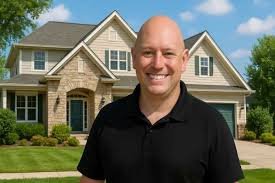
Plenty of Stafford buyers still believe a home purchase needs 20% down. That belief keeps Marines at MCB Quantico, commuters out of North Stafford, and families eyeing Embrey Mill or Aquia Harbour on the sidelines longer than necessary. Several low down payment home loans exist, and each trades cash today for a different long-term cost: a funding fee, mortgage insurance, or an eligibility test.
Duane Buziak is a mortgage broker, not a lender, and has been helping families find their new homes since 2014. The seven strategies below run from veteran-specific programs to civilian options to ways of covering cash to close. Terms you will see: LTV (loan-to-value, the loan as a percentage of the price), PMI (private mortgage insurance on conventional loans), MIP (FHA mortgage insurance premium), COE (VA Certificate of Eligibility), and entitlement (the amount of your loan the VA guarantees).
1. Use a VA Loan With Zero Down Near MCB Quantico
For eligible veterans and service members, the VA home loan is the strongest low-down option. The VA guarantees part of the loan, so private lenders accept no down payment, and there is no monthly mortgage insurance. The cost is a one-time funding fee, which can be financed into the loan unless you are exempt (for example, veterans receiving VA disability compensation and Purple Heart recipients).
Consider a hypothetical: a Marine with full entitlement buys a $550,000 home in Garrisonville (an illustrative price, not a market statistic). As of 2026, the first-use funding fee with zero down is 2.15%, or $11,825. Financed, the loan is $561,825. At an assumed 6.25% on a 30-year fixed, principal and interest is about $3,459 a month, with no PMI or MIP added. A 5% conventional loan on the same home needs about $27,500 down before closing costs, plus PMI. Rate assumption: 6.25%, 30-year fixed, illustrative only, not a quote. The APR would be higher, and the figure excludes taxes and homeowners insurance.
Full-entitlement borrowers face no VA purchase limit, though the lender still has to approve the loan amount against your income. Believing there is a cap for everyone is a common mistake. Another is ignoring the funding fee, or missing an exemption you already qualify for.
- Request your COE electronically using your SSN and date of birth, or through the VA portal.
- Get pre-approved so you know your price range before touring.
- Confirm whether your disability rating or other status exempts you from the funding fee.
- Target homes likely to satisfy the VA appraisal’s condition standards.
- Line up your closing date with your PCS orders and any lease end.
To measure it, compare cash needed to close against a conventional alternative, and compare the monthly payment with no mortgage insurance included.
2. Rebuild Entitlement Math Before a Second VA Purchase
Many service members assume that keeping a first home means a second VA loan will need 25% down. Not necessarily. Beyond the basic entitlement, the VA offers second-tier (bonus) entitlement of 25% of the county loan limit, minus what your current loan is using. That remaining amount, multiplied by four, is the loan size you can buy with nothing down.
Here is an illustration with a hypothetical used-entitlement figure. Suppose the county limit is $1,249,125 (the 2026 national high-cost ceiling; confirm the current figure for Stafford County at FHFA). Multiply by 25% for $312,281. Your first home, a $400,000 loan, used $100,000 of entitlement, leaving $212,281. Multiply by four: about $849,125 of zero-down purchasing power. A $700,000 purchase near Stafford Courthouse fits entirely. A $900,000 purchase leaves $50,875 above the limit, and the required down payment is 25% of that excess, about $12,719.
Two misconceptions cause the trouble: that a second VA loan always needs 25% down, and that your entitlement must be fully restored before you can use it again. Restoration is a separate option, typically involving selling the first home and paying off its VA loan, and it is not required for bonus entitlement.
- Read the entitlement used and remaining on your COE.
- Run the calculation with the current county limit, not last year’s.
- Decide whether you will keep the first home as a rental or sell it, since that changes your debt-to-income ratio.
- Compare the bonus-entitlement route against restoring entitlement after a sale.
Track three numbers: remaining entitlement, the resulting zero-down limit, and any down payment owed on the excess.
3. Choose FHA at 3.5% Down When Credit Is Still Building
FHA loans, insured through HUD, allow 3.5% down with a credit score of 580 or higher, and scores in the 500 to 579 range generally need 10% down. Because the government insures the loan, lenders tolerate thinner credit histories. You pay for that with two charges: an upfront MIP and an annual MIP billed monthly.
Illustration: a $425,000 townhome in North Stafford. Down payment at 3.5% is $14,875, leaving a base loan of $410,125. As of 2026, the upfront MIP is 1.75% ($7,177), usually financed, and the annual MIP for most loans at this size and LTV is 0.55%, about $188 a month. At an assumed 6.25% on a 30-year fixed, principal and interest on the financed $417,302 is about $2,569, so the payment is roughly $2,757 before taxes and insurance. Illustrative assumptions: 6.25% rate, 30-year fixed, not a quote; APR will differ.
The common mistake is overlooking that with less than 10% down, MIP generally lasts for the life of the loan. It does not drop off at 80% LTV the way conventional PMI can. Plan the exit from day one: a later refinance into a conventional loan once your credit and equity improve.
- Pull your credit scores and note how far you sit above or below 580.
- Gather two years of employment and income documentation.
- Verify the FHA limit for Stafford County; it is typically set well above the baseline in this high-cost area.
- Get pre-approved, and if you are close to a score threshold, build a credit improvement timeline first.
Measure the full monthly payment including MIP, and the break-even point: how many months of savings from a later refinance cover its closing costs.
4. Put 3% Down With a Conventional Low-Down Program
Conventional does not mean 20% down. Fannie Mae and Freddie Mac programs, including HomeReady and Home Possible, as well as standard 97% LTV options for qualifying first-time buyers, allow 3% down. Some carry income limits and homebuyer education requirements, so check the current terms on Fannie Mae and Freddie Mac. The mechanism that makes it work for strong-credit buyers is pricing: PMI rates fall as scores rise, and unlike FHA MIP, PMI is cancellable.
Illustration: a buyer with strong credit purchases a $550,000 home near Embrey Mill. With 3% conventional, the down payment is $16,500 and the loan is $533,500. At an assumed 6.25%, principal and interest is about $3,285, and a hypothetical 0.5% annual PMI quote adds about $222, for roughly $3,507. The same home with FHA at 3.5% down comes to about $3,568 with upfront MIP financed and 0.55% annual MIP. The gap is small here, but it widens or reverses as credit scores change, which is why you compare real quotes. All rates and the PMI figure are assumptions for illustration, not offers.
The mistake is assuming conventional always needs 5% to 20% down, or that PMI is permanent. Under the federal Homeowners Protection Act, you can request PMI removal at 80% of the original value and it ends automatically at 78%, subject to conditions.
- Confirm which program you qualify for, including any income limits and education requirements.
- Collect PMI quotes at your actual credit tier, since a 20-point score difference can move the price.
- Model 3%, 5%, and 10% down to see where PMI drops sharply.
Measure PMI cost against FHA MIP, and estimate the months until PMI can be removed.
5. Use USDA Zero-Down Only If the Address Qualifies
The USDA guaranteed program permits no down payment, but only for homes in eligible rural areas and for households within income limits. Eligibility is property-specific. Many Stafford addresses will not qualify, and an outlying one might, so a ZIP code or neighborhood name tells you nothing. The program has an upfront guarantee fee and an annual fee, generally lower than FHA’s, so it is worth checking when it applies.
Illustration: a buyer likes a home on the outer edge of the county. They enter the address into the USDA property eligibility tool and the result is “eligible.” Zero down is available, subject to household income. A second buyer checks a home closer to Rockhill and the result is “not eligible.” That buyer pivots the same day to FHA or 3% conventional rather than discovering the problem three weeks into a contract.
The costly mistake is assuming eligibility from the area, writing an offer, and learning late that the loan program doesn’t apply. The map can also change, so a result from last year does not carry over.
- Run the exact property address through the USDA eligibility tool before touring seriously.
- Check your household income against the current limit for your household size. Income is counted for everyone in the household, not just the borrowers.
- Confirm with your broker, and save a screenshot of the result, before writing an offer.
Measure two things: a yes or no on eligibility before you offer, and the cash saved versus your next-best option, such as 3% conventional on the same home.
6. Cover Cash to Close With Gifts and Seller Credits
A low down payment does not cover everything. Closing costs and prepaid items still need funding. Documented gift funds from family and negotiated seller concessions can shrink what you bring to the table, and in some scenarios may support a no-out-of-pocket closing option.
Illustration: a young couple buying in Aquia Harbour has parents gift $15,000 toward the down payment. The parents sign a gift letter stating that no repayment is expected, and the bank statements show the transfer. The contract also includes a seller credit toward closing costs, within the cap for the loan type. Caps vary: FHA generally allows up to 6%, VA limits seller-paid concessions to 4% (not counting normal closing costs), and conventional caps depend on LTV, from 3% above 90% LTV up to 9% at lower LTVs. Check current guidelines with your broker before writing the number into the contract.
The mistake that sinks files is money moving without a paper trail: a large deposit that lands in your account days before application with no source. The second is writing a credit above the cap, which the lender will cut back, leaving you short at the table.
- Get the gift letter and the donor’s bank documentation early, before you go under contract.
- Confirm the concession limit for your loan type.
- Have your agent write the credit into the contract as a specific dollar amount or percentage.
- Do not combine other assistance sources until your broker has reviewed how they interact.
Measure total cash to close after gifts and credits against your starting estimate, and keep that number next to your post-closing savings.
7. Compare Low Down Payment Scenarios in a Personalized Mortgage Plan
The cheapest program is rarely obvious from a headline rate. Credit tier, price, and savings shift the answer. As a broker, Duane Buziak can run your numbers across hundreds of wholesale lenders and programs, so you see the comparison before you commit to a path.
Illustration: one $550,000 price point near Stafford Courthouse, run four ways: VA at zero down, FHA at 3.5%, conventional at 3%, and conventional at 10% for contrast. The VA version typically has the lowest cash need and no monthly mortgage insurance but carries the funding fee. FHA and 3% conventional sit close on payment, with the winner set by your score. The 10% version costs more upfront but usually brings a lower PMI charge and a smaller loan balance.
| Program | Minimum Down | Mortgage Insurance | Credit Guidance | Typical Fit | Stafford Notes |
|---|---|---|---|---|---|
| VA | 0% for eligible borrowers | None monthly; one-time funding fee unless exempt | Flexible; lender overlays vary | Veterans, service members, some surviving spouses | Strong match for MCB Quantico commuters and PCS timelines |
| FHA | 3.5% at 580+ (10% at 500 to 579) | Upfront MIP plus annual MIP, often for the loan’s life | Accepts building credit | Buyers with limited credit history or higher debt ratios | Townhomes in North Stafford often fit within the limit |
| Conventional 3% | 3% | PMI, cancellable | Pricing improves with higher scores | Strong-credit first-time buyers | Common for newer communities like Embrey Mill |
| USDA | 0% | Upfront and annual guarantee fees | Moderate; income limits apply | Buyers in eligible rural locations | Address-by-address check required; many Stafford homes will not qualify |
The common mistake is choosing the smallest down payment automatically. A zero-down purchase that drains your savings, or a payment you can barely carry, is worse than putting more down. Share your credit, income, savings, and timeline, request scenarios across programs, and decide on payment, cash to close, and reserves. Revisit the plan if rates move or your score changes. Measure monthly payment, cash to close, and post-closing reserves across every version.
Questions Stafford Buyers Ask About Low Down Payment Loans
Do I need 20% down to buy a home in Stafford?
No. VA loans can be zero down, FHA starts at 3.5%, and some conventional programs start at 3%. A smaller down payment generally means mortgage insurance or a funding fee.
What is the lowest down payment I can put on a home?
Zero, through VA for eligible borrowers or USDA for eligible properties and households. For civilian buyers, 3% conventional or 3.5% FHA are the usual minimums.
Does a VA loan have a limit for Stafford County?
Borrowers with full entitlement have no VA purchase limit, though the loan must still fit your income and the property must appraise. Limits matter mainly when entitlement is already in use.
How much is the VA funding fee in 2026?
For a first-use purchase with no down payment, it is 2.15% of the loan. It falls with a larger down payment and is waived for exempt borrowers. See the VA funding fee page for the current table.
Is FHA or 3% conventional cheaper?
It depends on your credit score and price. Stronger credit tends to favor conventional because PMI prices fall and can be canceled, while FHA MIP often stays for the life of the loan.
Can I use gift money for my down payment?
Yes, on most programs, with a signed gift letter and documentation of the transfer. Your loan officer will confirm what a given loan type accepts.
Can the seller pay my closing costs?
Often, within caps set by the loan type. That can reduce or, in some scenarios, support a no-out-of-pocket closing option, but it is not guaranteed.
Is Duane Buziak a lender?
No. Duane Buziak is a mortgage broker who compares programs from hundreds of wholesale lenders to match your situation. Stafford Mortgage by Duane Buziak is licensed in VA, FL, TN, GA, DC, NC, SC, and MD.
Where to Start: VA First, Then FHA Against 3% Conventional
Veterans and service members should start with VA entitlement and the COE, since zero down with no monthly mortgage insurance is hard for other programs to beat. If you have used a VA loan before, run the entitlement math in strategy 2 before assuming you need 25% down. Civilian buyers should compare FHA against 3% conventional with real quotes at their credit tier, and check USDA only for a specific address. Then layer in gifts and seller credits to reduce cash to close, and finish by testing the whole picture against your reserves.
Your dream home in Stafford County is closer than you think, with personalized mortgage solutions and local expertise that puts your family’s needs first. Connect with Duane Buziak today to explore flexible home loan options, discover competitive rates, and get the trusted guidance that’s earned recognition as one of Virginia’s top mortgage professionals. Call Stafford Mortgage by Duane Buziak at 540-870-5594 for a personalized plan.