
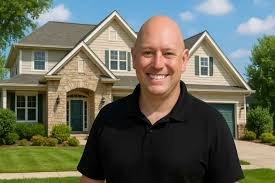
Picture this: a family scrolling through home listings, eyes landing on a property near Aquia Harbour — a little more space, a little more quiet, and a price point that feels within reach. Then a friend mentions something they had never considered: a USDA Rural Development loan with no down payment required. Their first reaction? “That can’t apply to us. We live near a major military base, not a farm.”
That reaction is completely understandable, and it is also one of the most common misconceptions Duane Buziak hears from Stafford County buyers. The truth is, parts of Stafford County have historically included USDA-eligible addresses — and for civilian buyers without VA eligibility, this program can be the difference between waiting another two years to save a down payment and buying a home this year.
Duane Buziak (NMLS #1110647) has been helping Stafford County families find their new homes since 2014. As an independent mortgage broker, he works with hundreds of wholesale lenders to match buyers with programs that actually fit their situation — and USDA Rural Development loans are one of the most underused tools in that toolkit for the right buyer.
This article walks through the four core pillars of rural development home loan requirements: property location eligibility, income limits, credit and financial standards, and property condition rules. By the end, you will know whether USDA is worth exploring for your specific situation — and exactly what to do next.
Segment B article — general buyers pursuing FHA, conventional, or USDA financing in Stafford County. Secondary Segment A reference in the VA comparison section.
Table of Contents
ToggleWhy Parts of Stafford County Still Qualify for USDA Financing
Here is the first thing to understand about USDA Rural Development loans: “rural” does not mean farmland. It does not mean you need a barn, a well, or a gravel road. USDA uses population-density thresholds and community classification standards to define eligible areas — and under those standards, plenty of suburban-adjacent communities qualify.
The formal program is the USDA Section 502 Guaranteed Loan Program, administered by USDA Rural Development. Eligibility is determined address by address, not by zip code or neighborhood name. That distinction matters enormously in a county like Stafford, where you can drive five minutes from a commercial corridor into an area with a completely different eligibility status.
Stafford County has experienced significant population growth over the past two decades, as documented by the U.S. Census Bureau. That growth has caused USDA to re-examine eligibility designations during census update cycles — meaning areas that were eligible in prior years may lose eligibility as population density increases. The inverse is also possible, though less common. This is why verifying your specific address on the USDA Rural Development Eligibility Map is the mandatory first step, not an optional one.
With that caveat clearly stated, here is how Stafford’s geography generally breaks down for self-screening purposes.
Likely eligible zones: Addresses in outer Stafford County, including areas near Aquia Harbour, Rockhill, and portions of the Stafford Courthouse area away from the commercial core, have historically included USDA-eligible properties. These are areas where lower population density and community classification have aligned with USDA’s rural designation standards. Do not assume — verify — but these are reasonable starting points for investigation.
Likely ineligible zones: The Garrisonville Road corridor, England Run, and Embrey Mill are densely developed suburban areas. The commercial density, subdivision scale, and population concentration in these areas make USDA eligibility highly unlikely. If your target property is in one of these neighborhoods, USDA is probably not a viable path, and your conversation with Duane will quickly pivot to FHA or conventional options.
Mixed zones: North Stafford and the broader Stafford Courthouse area are genuinely mixed. Some addresses qualify; others do not. There is no shortcut here — the USDA eligibility map is the only authoritative answer.
The practical takeaway: before you fall in love with a property and start building your financing plan around USDA, spend two minutes on the eligibility map. Duane can also run this check in the first few minutes of an initial conversation, which is exactly why that first call is worth making before you go further down the path.
Income Limits: The Requirement That Surprises Most Stafford Buyers
If the geographic eligibility check is the first hurdle, the income limit is the one that catches buyers off guard most often — and not always in the way they expect.
USDA’s guaranteed loan program uses a two-tier income structure. The standard guaranteed loan program (the one you access through a broker like Duane) has a higher income ceiling, designed for moderate-income households. The Section 502 Direct Loan program, which is administered directly by USDA and not brokered through private lenders, serves very low income borrowers and has a much lower income threshold. These are two separate products. If you are working with a mortgage broker, you are almost certainly exploring the guaranteed program — not the direct program. Do not conflate the two.
Here is the good news for Stafford County buyers: because Stafford’s median household income is relatively high compared to many rural Virginia counties, USDA sets the income ceiling for Stafford correspondingly higher. Many buyers who assume they earn too much to qualify are surprised to discover they fall within the limit. The current income limits for Stafford County are published and updated by USDA at rd.usda.gov — Duane references this tool directly rather than quoting figures that may shift between publication and your application date.
Now for the nuance that trips up the most buyers: USDA counts all household income, not just the income of the borrower or co-borrower on the loan.
This is not the same as how your lender calculates qualifying income for the loan itself. USDA’s household income test is a separate calculation. It includes the income of every adult living in the home — a spouse who is not on the loan, a working adult child who lives at home, a parent contributing to household expenses. If that combined household income exceeds the county limit for your household size, you are ineligible for USDA financing regardless of how strong your individual borrower profile looks.
This rule creates two common scenarios in Stafford. The first: a buyer with a strong individual income assumes they earn too much, when in fact their household size (say, a family of five) pushes the limit high enough that they qualify comfortably. The second: a buyer with a modest individual income assumes they are a lock, then discovers that a working adult child in the home pushes the household total over the ceiling.
Neither scenario can be resolved by guessing. Running the household income calculation against current USDA limits for Stafford County is a five-minute exercise that Duane can walk through with you before you invest time in anything else. That single conversation — no hard credit pull required — can confirm whether USDA is on the table or redirect you toward a program that actually fits.
Credit and Financial Standards: What USDA Actually Requires
Once you have cleared the location and income hurdles, the credit and financial requirements for rural development home loans are genuinely accessible for buyers who have maintained reasonable credit habits. Here is what you actually need to know.
Credit Score Threshold: A 640 credit score is the widely cited benchmark for automated underwriting eligibility under the USDA guaranteed loan program. Scores at or above 640 allow your application to move through streamlined underwriting with most lenders. Scores below 640 do not automatically disqualify you — but they do require manual underwriting, which means more documentation, more scrutiny of your credit history, and longer processing time.
It is worth noting that 640 is a lender overlay standard applied broadly across the industry, not a hard statutory floor written into USDA regulation. This is exactly why working with a broker who can shop across hundreds of wholesale lenders matters. Some lenders apply stricter overlays; others are more flexible with manual underwriting files. Duane’s access to the wholesale market means he can identify which lenders are the right fit for your specific credit profile, rather than forcing your file into a single lender’s box.
Debt-to-Income Ratios: USDA uses two ratio measurements. The front-end ratio compares your proposed housing payment (principal, interest, taxes, insurance, and the annual guarantee fee) to your gross monthly income. The back-end ratio compares all monthly debt obligations — housing plus car payments, student loans, credit cards, and other recurring debts — to your gross monthly income. USDA publishes guideline thresholds for both ratios, and exceeding them does not automatically result in a denial if compensating factors are present. Strong reserves, a history of paying similar or higher housing costs, or a particularly low front-end ratio can all support a manual underwriting exception. Duane can walk through your specific numbers to identify where you stand before you apply.
The No-Down-Payment Structure: The headline benefit of USDA guaranteed loans is real: $0 down payment required. For a buyer purchasing in an eligible Stafford County address, this eliminates the single largest barrier to homeownership for most households.
However, USDA does carry a guarantee fee structure that functions similarly to mortgage insurance. There is an upfront guarantee fee, which is typically financed into the loan rather than paid at closing, and an annual fee that is added to your monthly payment. The current fee schedule is published at USDA’s program page — fee percentages are subject to change, so Duane will always reference the current schedule rather than a figure that may be outdated.
When the upfront fee is financed into the loan and seller concessions or lender credits cover remaining closing costs, USDA can genuinely function as a no-out-of-pocket closing option for qualified buyers. That combination — no down payment, financed guarantee fee, and negotiated closing cost coverage — is what makes USDA particularly powerful for buyers who are income-qualified but cash-constrained.
Property Requirements: What the Home Itself Must Meet
Qualifying for a USDA loan is not just about the buyer — the property has to meet its own set of standards. These requirements exist to protect both the borrower and the program, and understanding them upfront prevents surprises late in the transaction.
Primary Residence Only: USDA guaranteed loans are strictly for owner-occupied primary residences. You cannot use this program to purchase an investment property, a vacation home, or a rental unit. The borrower must intend to occupy the home as their primary residence, and USDA takes this requirement seriously during underwriting. If your plan involves renting out any portion of the property or using it seasonally, USDA is not the right program.
Minimum Property Requirements: The home must meet USDA’s Minimum Property Requirements (MPRs), which are comparable in scope to FHA property standards. In practical terms, this means the home needs to have functional systems: a sound roof, working HVAC, operational plumbing and electrical, and no significant safety hazards. The property must also be modest in size and value relative to the surrounding area — USDA is not designed to finance luxury homes, and appraisers apply this standard during the valuation process.
Condominiums, manufactured homes, and multi-unit properties face additional eligibility restrictions under USDA guidelines. If your target property falls into one of these categories, confirm eligibility early rather than after you have invested in an inspection and appraisal.
Loan Size Considerations: USDA guaranteed loans do not carry a published maximum loan limit in the same way conventional conforming loans do. However, the loan amount must be reasonable relative to the appraised value, and practical limits exist based on USDA’s area loan limit guidance. In Stafford County, where home prices have risen with the broader Northern Virginia market, buyers targeting higher price-point properties may find that USDA’s value standards become a limiting factor. This is another area where running the numbers with Duane early in the process prevents wasted time.
The property requirements are not designed to be punitive — most well-maintained homes in Stafford’s outer neighborhoods will meet them without issue. The key is ordering the USDA appraisal with a clear understanding of what the appraiser is evaluating, so there are no surprises at the inspection stage.
USDA vs. VA in Stafford: Choosing the Right Zero-Down Path
(Secondary Segment A reference — Quantico/military buyers)
Stafford County has one of the highest concentrations of active-duty military, veterans, and DoD civilians in Virginia, driven by proximity to MCB Quantico. For that population, this section is worth reading carefully — because the answer is almost always the same.
If you have VA loan eligibility, use it. VA loans offer no down payment, no mortgage insurance of any kind, no geographic restriction, and no income cap. VA cash-out refinancing allows up to 100% LTV. The VA funding fee (which can be financed) is the only additional cost structure, and many veterans with service-connected disabilities are exempt from it entirely. USDA’s annual guarantee fee, by contrast, adds to your monthly payment for the life of the loan. That ongoing cost differential matters over a 30-year term.
USDA serves a specific and meaningful gap: civilian buyers in Stafford who do not have VA eligibility, who have qualifying household income, and who are purchasing in an address-verified eligible area. This is a real segment in Stafford’s outer neighborhoods, and for those buyers, USDA is often the most accessible path to homeownership available.
The comparison table below maps both programs side by side, along with FHA, so you can self-identify which path fits your situation before picking up the phone.
| Feature | USDA Guaranteed | VA Loan | FHA Loan |
|---|---|---|---|
| Down Payment | $0 required | $0 required | 3.5% minimum (with 580+ score) |
| Geographic Restriction | Yes — USDA-eligible addresses only | None | None |
| Income Cap | Yes — household income limit applies | None | None |
| Mortgage Insurance / Guarantee Fee | Upfront + annual guarantee fee | Funding fee only (no monthly MI) | Upfront MIP + monthly MIP |
| Minimum Credit Score (guideline) | 640 for automated underwriting | No statutory minimum; lender overlays apply | 580 for 3.5% down; 500 for 10% down |
| Primary Residence Required | Yes | Yes | Yes |
| Who Qualifies | Civilian buyers in eligible rural areas within income limits | Veterans, active-duty, eligible surviving spouses | Most buyers meeting credit and income standards |
The decision framework is straightforward: VA-eligible buyers in Stafford should start and usually end with VA. Civilian buyers in eligible outer-county areas should run the USDA income and address check first. Buyers who do not meet USDA’s geographic or income requirements have FHA and conventional as their primary paths. Duane can walk through all three in a single conversation.
Worked Example: USDA in Stafford County by the Numbers
Concrete numbers make this real. Here is a simplified scenario using Stafford County context — note that the home price reference point below should be verified against current Virginia Association of Realtors or U.S. Census Bureau ACS data at time of application, as median prices shift with market conditions.
Scenario: A civilian buyer (no VA eligibility) is purchasing a home at a price point consistent with Stafford County’s current median — roughly in the $430,000 to $460,000 range based on recent market data, though buyers should confirm current figures. The property address has been verified as USDA-eligible near Rockhill. Household income falls within Stafford County’s USDA limit for their household size, confirmed against the current USDA income limits tool.
USDA Guaranteed Loan path:
1. Down payment: $0. The full purchase price is financed.
2. Upfront guarantee fee: Financed into the loan at the current USDA-published rate (reference the current fee schedule at USDA’s program page — do not use a percentage that may be outdated by publication date). This means the loan balance is slightly higher than the purchase price, but no cash is required at closing for this fee.
3. Annual guarantee fee: Added to the monthly payment, calculated on the outstanding loan balance. This is the ongoing cost that distinguishes USDA from VA.
4. Closing costs: Negotiated seller concessions or lender credits can cover these, making the transaction a genuine no-out-of-pocket closing option for a prepared buyer.
FHA comparison on the same purchase price:
1. Down payment: 3.5% of the purchase price. On a $445,000 home, that is approximately $15,575 out of pocket before closing costs.
2. Upfront MIP: 1.75% of the base loan amount, typically financed.
3. Annual MIP: Added to the monthly payment, similar in function to USDA’s annual fee but calculated differently.
The trade-off is clear: USDA eliminates the down payment entirely, which is the larger cash barrier for most buyers. The annual fee structure means the monthly payment will be slightly higher than a conventional loan without mortgage insurance, but for a buyer who cannot access VA and does not have $15,000 to $20,000 sitting in savings, USDA’s no-down-payment structure is often the deciding factor. Duane can model both scenarios with current fee schedules and your specific purchase price during an initial conversation.
How to Apply for a USDA Loan in Stafford County
Understanding the requirements is step one. Knowing how to move through the process efficiently is what separates buyers who close on time from those who lose their offer to a faster-moving competitor. Here is how the USDA application process actually works in Stafford County.
Step 1 — Address and income pre-check: Before you pull a single document, verify two things. First, confirm the property address on the USDA eligibility map. Second, run a household income estimate against current Stafford County limits. Duane can do both of these in a single phone call — no hard credit pull required for this initial conversation. This step takes minutes and can save weeks of wasted effort if the property or income does not qualify.
Step 2 — Documentation assembly: USDA guaranteed loans require more documentation than conventional loans, specifically because of the household income verification requirement. You will need two years of federal tax returns for all household members, W-2s and recent pay stubs for all earners, standard mortgage application documents (bank statements, employment verification, asset documentation), and documentation for any non-employment income sources. The household income requirement means you cannot simply submit the borrower’s file — every adult in the home contributes to the calculation, and USDA will ask for documentation to support it.
Step 3 — Timeline reality: USDA guaranteed loans processed through the broker channel typically take longer than conventional or VA loans. The additional step is USDA’s conditional commitment review, which occurs after the lender has completed its own underwriting. This review adds time to the process, and in a competitive Stafford market where sellers are evaluating multiple offers, that timeline matters.
Buyers using USDA financing should discuss offer strategy with Duane before submitting. In some cases, a longer closing window can be negotiated with a motivated seller. In others, a faster-closing conventional offer may be the more competitive choice even if it requires a down payment. Understanding the trade-offs before you are under contract is how you avoid making a rushed decision under pressure.
Duane’s experience with the USDA process since 2014 means he can set accurate expectations from day one — not after you have already signed a purchase agreement.
Frequently Asked Questions: USDA Loans in Stafford County
1. What credit score do I need for a USDA Rural Development loan in Stafford County?
A 640 credit score is the standard threshold for automated underwriting eligibility through most lenders offering USDA guaranteed loans. Scores below 640 do not automatically disqualify you, but they require manual underwriting with additional documentation and review. Because this is a lender overlay standard rather than a hard USDA statutory requirement, working with a broker who shops multiple lenders gives you more options if your score is below 640.
2. Does Stafford County, Virginia qualify for USDA rural loans?
Parts of Stafford County have historically included USDA-eligible addresses, particularly in outer-county areas away from the densely developed commercial corridors. Eligibility is determined address by address, not by zip code or neighborhood name, and can change with census re-designations. Verify your specific property address at the USDA eligibility map before assuming eligibility.
3. What is the income limit for a USDA loan in Stafford County, VA?
Income limits for Stafford County are published by USDA and vary by household size. Because Stafford’s median household income is relatively high for Virginia, the county’s USDA income ceiling is set higher than in many rural counties — meaning some buyers who assume they earn too much may actually qualify. Check current limits at rd.usda.gov, and remember that all household members’ income counts, not just the borrower’s.
4. Can I use a USDA loan to buy a home near Aquia Harbour or Rockhill?
Addresses in the Aquia Harbour and Rockhill areas of Stafford County have historically included USDA-eligible properties, but eligibility is address-specific and subject to change with census updates. Verify your specific address on the USDA eligibility map before proceeding. Duane can run this check in the first minutes of an initial conversation.
5. What is the difference between a USDA guaranteed loan and a USDA direct loan?
The USDA Section 502 Guaranteed Loan is the program available through private lenders and mortgage brokers. It serves moderate-income households and carries higher income limits. The USDA Section 502 Direct Loan is administered directly by USDA for very low income borrowers and is not available through private lenders. If you are working with a broker like Duane, you are exploring the guaranteed program.
6. Does a USDA loan require mortgage insurance?
USDA guaranteed loans do not use the term “mortgage insurance,” but they do carry a guarantee fee structure that functions similarly. There is an upfront guarantee fee (typically financed into the loan) and an annual fee added to the monthly payment. Current fee amounts are published at USDA’s program page and are subject to change. This is distinct from VA loans, which have no ongoing monthly mortgage insurance equivalent.
7. How long does a USDA loan take to close compared to a conventional loan?
USDA guaranteed loans typically take longer to close than conventional or VA loans because of the USDA conditional commitment review step, which occurs after the lender completes its own underwriting. In a competitive Stafford market, buyers using USDA financing should discuss offer strategy and closing timeline expectations with Duane before submitting an offer.
8. Can veterans use a USDA loan instead of a VA loan in Stafford County?
Technically yes, but it is rarely the right choice. VA loans offer no down payment, no ongoing mortgage insurance equivalent, no geographic restriction, and no income cap — advantages that USDA cannot match for eligible veterans. The only scenario where USDA might make sense for a veteran is if the VA loan is unavailable for a specific reason. If you have VA eligibility, start with VA. Duane can walk through both programs if you want to compare your specific situation.
Your Next Step: A 10-Minute Conversation That Could Change Your Path
USDA Rural Development loans are one of the most genuinely underused programs available to Stafford County buyers — not because they are obscure, but because most people assume they do not qualify before they ever check. The truth is more nuanced. For civilian buyers without VA eligibility who are eyeing properties in eligible outer-county areas like Aquia Harbour or Rockhill, USDA can be the most direct path to homeownership available.
The key word is eligible. Eligibility here is address-specific and income-specific. No article, no general guide, and no neighbor’s experience can tell you whether your specific property and household situation qualify. Only a verified address check and a household income calculation against current Stafford County limits can do that.
Duane Buziak (NMLS #1110647) has been helping Stafford County families find their new homes since 2014. As an independent broker, he runs the USDA eligibility check and income calculation in a single conversation — no hard credit pull required for that initial discussion. If USDA is not the right fit, he will tell you exactly why and what program is, whether that is FHA, conventional, or VA.
Call or text Duane today at 540-870-5594 to check your address and income eligibility. Connect with Duane Buziak today to start that conversation and find out whether a USDA Rural Development loan is the right path for your Stafford County home purchase.